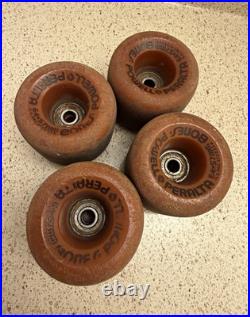
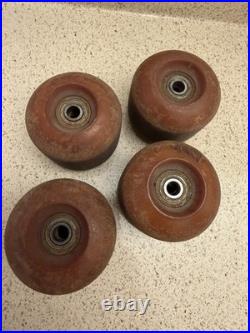
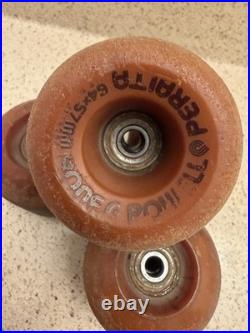
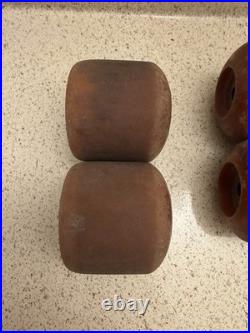
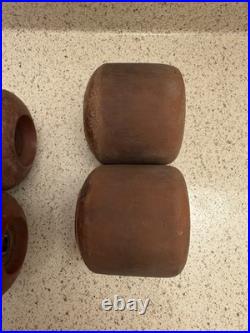
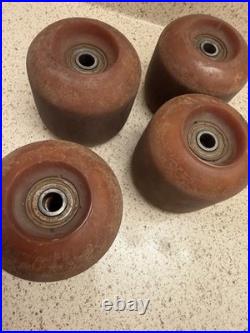
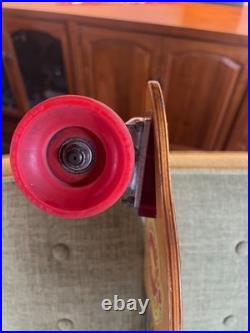
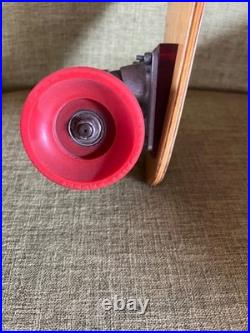
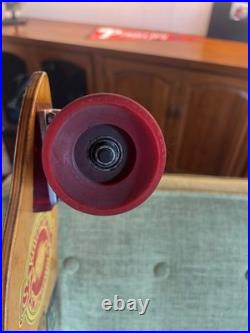
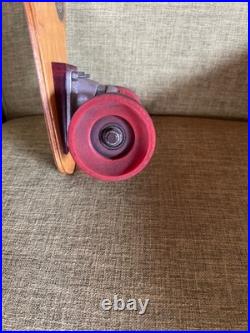
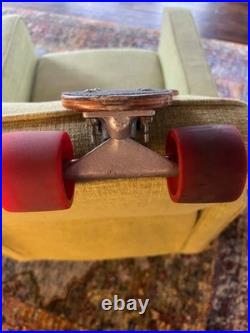
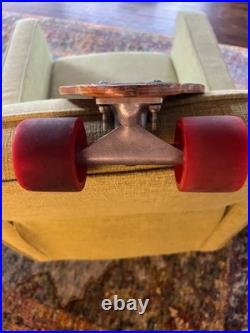
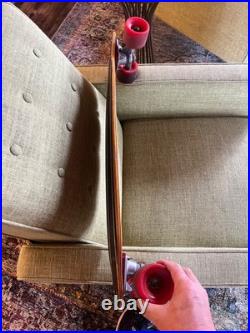
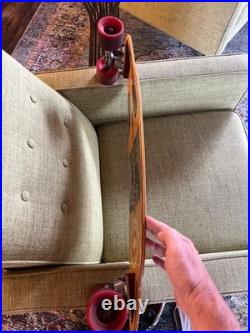
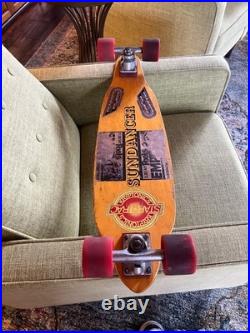
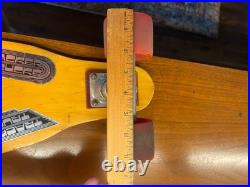
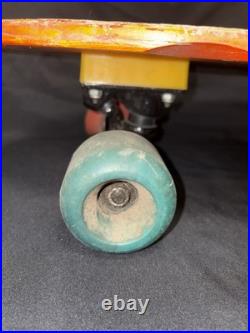
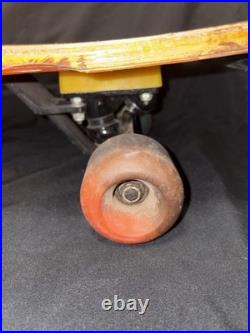
Vintage Powell Peralta 64×57 Skateboard Wheels Original Purple.. Faded to almost brown Bearings still spin Very little coning.. 48 states only Thanks for looking!
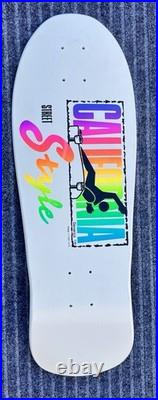
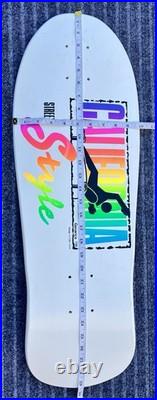
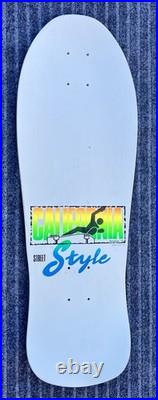
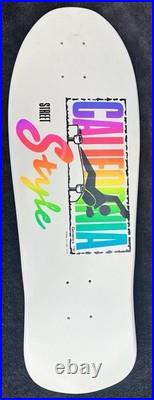
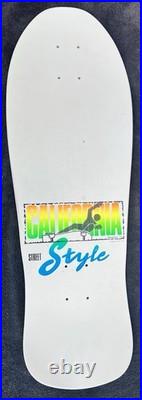
If you hit the B I N or I except best offer, you must pay immediately! I will start an’Unpaid Item’ case after 48 hours. This is not a re. This is a mid-to-late 1980s “GenericsT” skateboard deck (NOS / New Old Stock), white-dipped, made in California, USA, with “Street Style” graphics. Key details from the photos and markings. Brand/Marking: GenericsT, Made in Calif. This appears to be a budget/house-brand or generic line rather than a major pro-model brand Powell-Peralta, Santa Cruz, Vision, etc. It aligns with companies like Destiny Products (San Clemente/Long Beach area), which advertised American-made 7-ply maple “generic” decks and complete boards in Transworld around 1987 for the growing street market. Finish: White dip (full white paint coverage on the top/sides, common in the era for a clean look that showed graphics well). Graphics: Rainbow-gradient “STREET Style” script + “CALIFORNIA” in a distressed rectangular stamp with a black skater silhouette (handplant/invert-style pose). Very typical mid-80s California street-skating aesthetic as street style was rising alongside vert. Shape & size (from the tape measure): Classic old-school street/freestyle transition shape-rounded nose, pronounced kicktail, roughly 10? Wide × 29-30? Long. Old-school truck hole pattern (not modern new-school). Suitable for the era’s mix of street, freestyle, and some transition. In the mid-to-late 1980s, street skating exploded think early Gonz, Natas, etc. Many California makers produced affordable “street style” decks with bold, colorful graphics aimed at kids and intermediate skaters. White dips and rainbow/neon graphics were popular. Generics-style boards were the accessible alternative to expensive pro models. Condition: NOS means unused/new old stock-great for collectors or wall-hangers. The photos show clean graphics and wood with no skating wear visible. Cool rainbow graphics and clean NOS status help it. It’s a solid piece of mid-80s California street skating history-fun graphic, authentic Made-CA. This board is over. You can’t find this board anywhere. Now while you can! Outta the fire proof safe and into your hands! Watch for different skatehoard auctions and B I N’s coming soon. This board is offered on alternative sites.
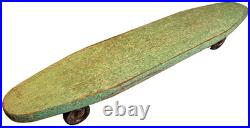
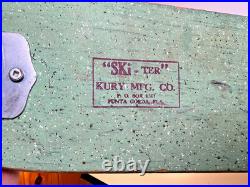
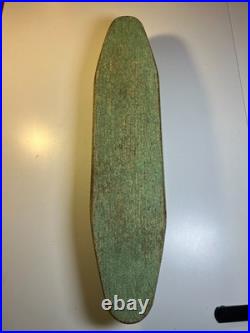
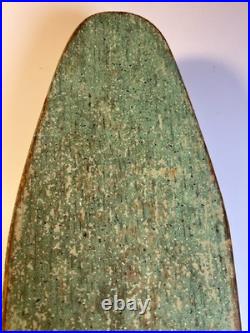
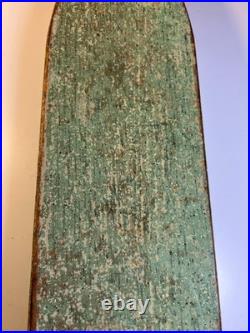
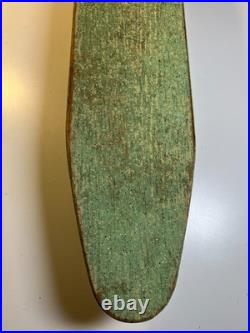
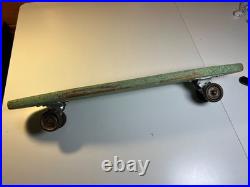
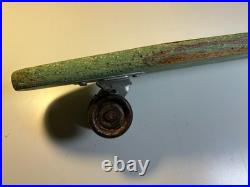
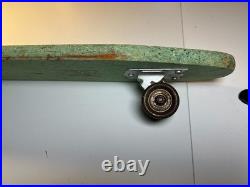
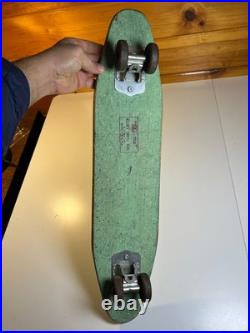
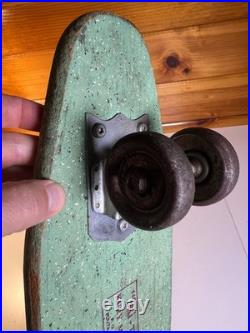
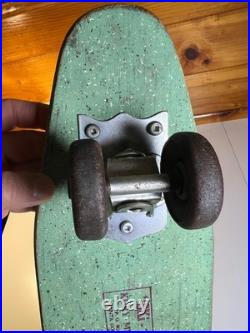
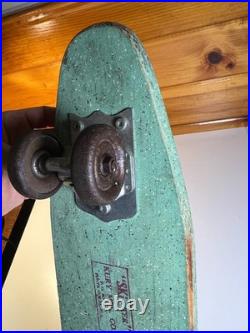
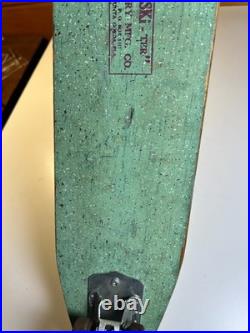
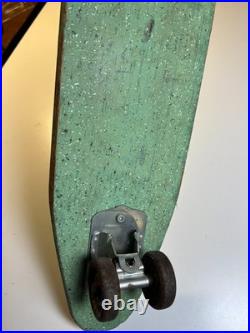
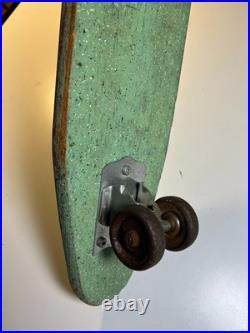
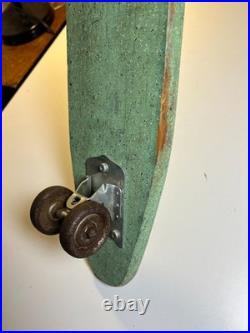
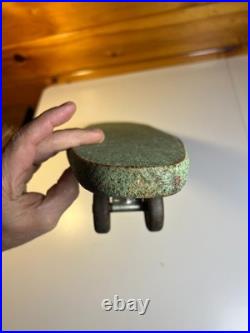
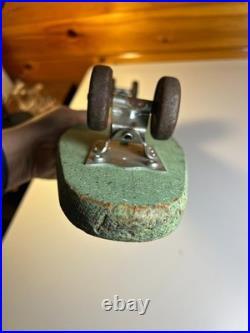
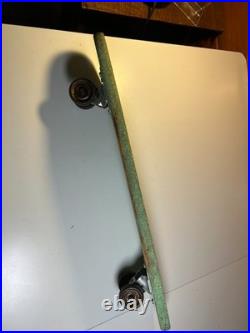
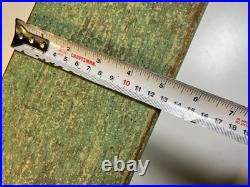
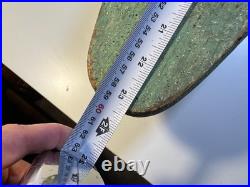
Early “Ski-Ter” Skateboard – Mint Green Speckled Paint, Metal Wheels & Florida History. Before skateboarding became a worldwide sport, a wooden board and four rattling metal wheels offered a wonderfully simple proposition: push off, find your balance, and see what happened next. This scarce “Ski-Ter” skateboard by Kury Mfg. Of Punta Gorda, Florida, captures that adventurous early spirit beautifully. Its narrow wooden deck, rounded ends, metal wheels, distinctive square-drive mounting screws, and exceptionally cool mint green paint scattered with black and white flecks make it an eye-catching survivor of the early sidewalk-surfing era. And that name: Ski-Ter! Short, playful, and slightly peculiar, it sounds perfectly suited to something a kid would send skittering down the sidewalk. The styling is unmistakably midcentury: seafoam green, contrasting speckles, and a simple burgundy maker’s stamp underneath. It has the visual personality to command attention even from someone who has never collected a skateboard. Date & Place In Skateboarding History. Estimated manufacture: circa early 1960s. The simple flat deck, metal wheels, and skate-derived running gear are characteristic of early commercial skateboards. An exact production year has not been established for this particular Ski-Ter. To appreciate its place in the story, consider how young commercial skateboarding still was. Roller Derby’s mass-produced skateboards appeared in 1959, and the first major commercial wave unfolded during the early 1960s. This board represents that formative approach to skateboarding: a narrow standing platform, elementary hardware, and hard wheels meeting hard pavement. Its design belongs to the period before modern urethane wheels transformed the experience in the early 1970s. You can understand the basic idea at a glance – and immediately appreciate how much nerve riding one required. That Fantastic Mint Green Speckled Finish. The paint is one of this board’s strongest attractions. A soft mint green or seafoam ground is peppered with irregular black and white flecks, creating a lively surface with the visual texture of a vintage terrazzo floor. The effect continues around the edges and across the underside, where the less-exposed finish preserves the pattern especially well. This is the kind of color combination that feels completely at home beside a pastel refrigerator, a chrome-legged kitchen table, or a two-tone station wagon. The finish has a Zolatone-style multicolor appearance. Zolatone and related decorative coatings were part of the midcentury enthusiasm for durable, visually interesting surfaces. Period advertising promoted their ability to apply contrasting colors together while keeping the individual colors distinct, producing a patterned finish that helped conceal surface imperfections. Here, the result is particularly appealing: pale green softened by age, tiny dark and light speckles, and honest wear exposing warm wood beneath. The top shows the heavier wear you would expect where shoes met the deck, while the underside offers a clearer view of the original-looking decorative scheme. The paint gives this board an identity all its own. The Maker – Kury Mfg. The underside retains a clearly readable rectangular maker’s mark. “SKi – TER” KURY MFG. BOX 1311 PUNTA GORDA, FLA. That Florida address is an especially interesting part of its appeal. Much of skateboarding’s familiar early commercial history centers on California; this board brings a distinctly different place into the collection. The surviving stamp firmly identifies the company name and its advertised location. Detailed company records establishing its founder, operating dates, production quantities, or full product line have not yet been located. What survives here is the product itself: a branded wooden skateboard with a memorable name, a deliberate decorative finish, and a maker’s address proudly printed underneath. For a Florida collector, a Punta Gorda history enthusiast, or someone assembling a collection of lesser-known early skateboard brands, that stamp is a major feature. “Ski-Ter” – A Name With Personality. There is something wonderfully evocative about Ski-Ter. Read aloud, it suggests movement: skiing, skating, skittering across pavement. Early wheeled boards were still finding their identity, and manufacturers experimented with names that evoked surfing, skiing, speed, and play. Ski-Ter has precisely that inventive character. Printed in burgundy against the mint green speckled underside, the name is also a terrific display detail. Turn the board over and it becomes a small piece of vintage commercial graphic design. Four Metal Wheels – And Every Crack In The Sidewalk. Imagine the sound before you imagine the speed. Four small metal wheels rattling across concrete. A sharp change in pitch at every sidewalk joint. Vibration traveling through the wooden deck, through the soles of your sneakers, and straight into your legs. These wheels offered little cushioning and limited traction. Rough pavement would make itself known immediately; an unfortunate pebble could interrupt the board’s progress much more abruptly than the rider’s. A smooth stretch of sidewalk must have felt like discovering a private speedway. The thrill was immediate and physical: a push, a wobble, a little momentum, and the sudden realization that balance was now your responsibility. Every ride came with its own percussion section. Looking at the worn deck and darkened wheels, it is easy to imagine the repeated attempts: one more push, one more stretch of pavement, one more try at making the turn. Square-Drive Mounting Screws & Early Construction Details. The underside photographs show distinctive square-recess mounting screw heads, commonly described as square-drive or Robertson-type screws. They are an interesting construction detail and add to the board’s industrial character. They do not, by themselves, establish a particular manufacturing year. Other visible features include. Narrow wooden deck with rounded, tapered ends. Flat standing surface without a raised kicktail. Mint green finish with contrasting black and white speckles. Burgundy underside maker’s stamp. Metal mounting plates and skate-style wheel assemblies. Four metal wheels with substantial age-related darkening and oxidation. Mounting hardware visible beneath the deck, leaving the upper riding surface visually simple. Together, these details give the board the direct, uncomplicated appearance that makes early skateboards so compelling to collectors. To match the board’s wonderful 1950s styling, picture a summer afternoon at the turn of the 1960s. A young rider steps outside in cuffed blue jeans, a plain cotton T-shirt or short-sleeved striped shirt, white socks, and canvas sneakers. The shoes are high-tops with white rubber toe caps. A neatly combed haircut is unlikely to remain neat for long. The family car has chrome trim. A screen door bangs shut. Somewhere nearby, a radio is playing the records that had helped give teenagers a musical world of their own. This is an imagined period scene, but the board supplies the convincing physical details: pastel paint, simple wood, exposed hardware, and four unforgiving wheels. Five Instantly Recognizable 1950s Songs For The Soundtrack. A fitting selection of enduring favorites to accompany its midcentury styling. “Rock Around the Clock” – Bill Haley & His Comets, 1954, becoming a defining hit in 1955. “Tutti Frutti” – Little Richard, 1955. “Hound Dog” – Elvis Presley, 1956. “Great Balls of Fire” – Jerry Lee Lewis, 1957. Goode – Chuck Berry, 1958. Put those records behind the image of this mint green board rattling down a sidewalk, and the atmosphere practically builds itself. Width: Approximately 5.25 inches. Maker marked: Kury Mfg. Location marked: Punta Gorda, Florida. Estimated period: early 1960s. Finish: Mint green with black and white speckling. An appealing, visibly used vintage survivor with substantial character. The photographs show wear to the painted riding surface, scratches, scuffs, scattered paint losses, exposed wood, and wear around the edges and rounded ends. The underside retains a much stronger presentation of the speckled finish and a readable maker’s stamp. The metal wheels show dark oxidation, surface rust, and wear. The mounting assemblies retain a brighter metallic appearance, with scattered discoloration and oxidation. The upper deck is considerably more worn than the underside, creating a strong contrast between the riding surface and the protected maker-marked face. Mechanical operation, bearing condition, and the originality of every individual component have not been established. Offered as a vintage collectible and display piece. Please examine all photographs closely for the finish, hardware, wheel surfaces, and overall condition. The attraction lies in the combination. An obscure Florida maker. A memorable Ski-Ter name. A surviving maker’s stamp. And that extraordinary mint green speckled paint. Displayed from above, it offers striking midcentury color and a beautifully simple outline. Displayed from underneath, it reveals the branding and hardware that tell its story. A distinctive addition to an early skateboard collection, a surf-history display, a midcentury interior, or a collection celebrating Punta Gorda and Florida-made objects.
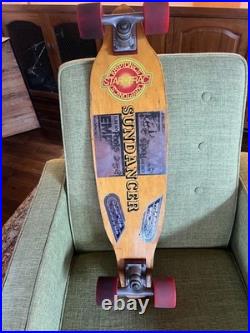
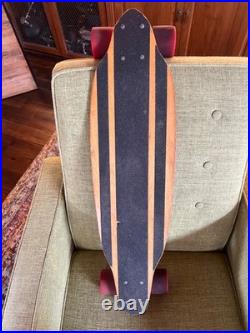
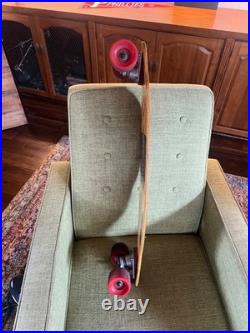
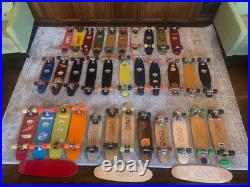
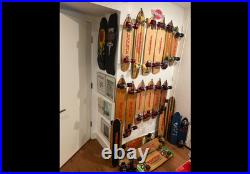
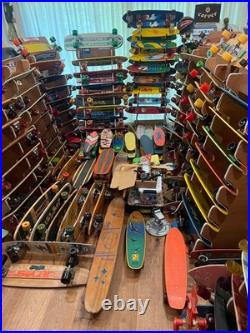
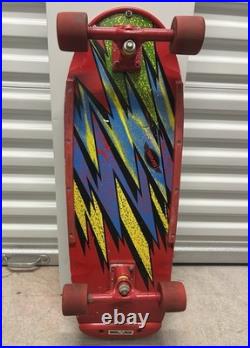
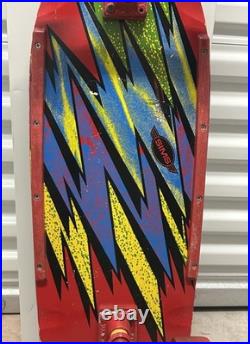
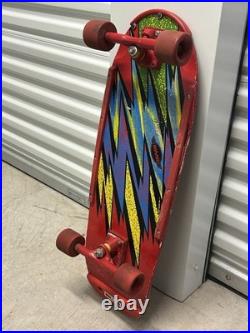
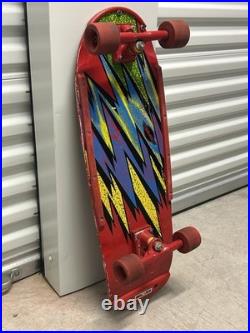
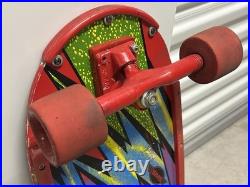
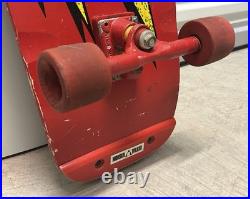
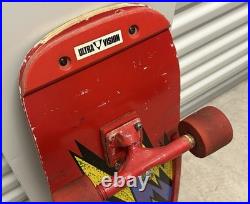
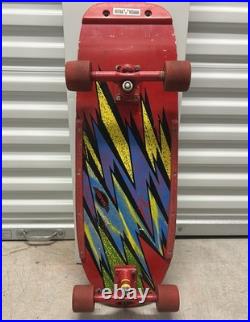
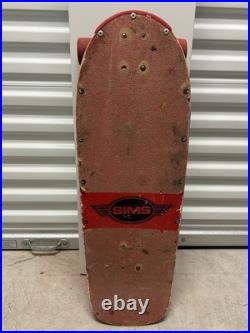
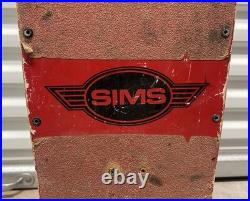
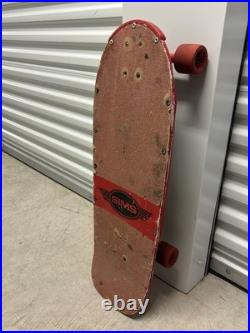
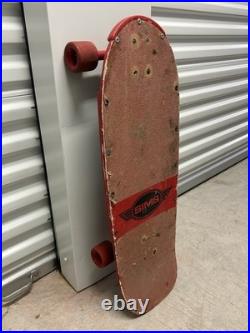
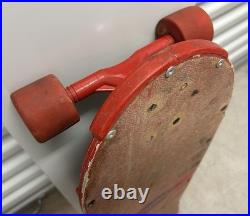
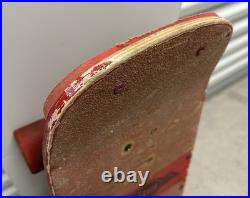
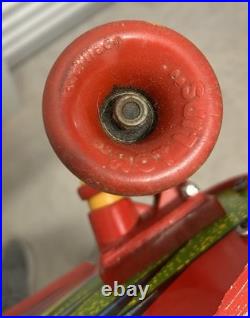
Tough to let go, but someone needs to display it. The images probably tell you everything you need to know. Incredible all red setup with killer multicolor colorway.
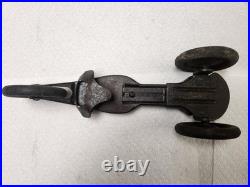
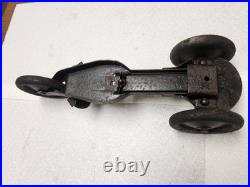
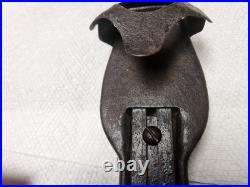
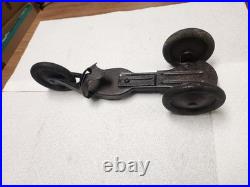
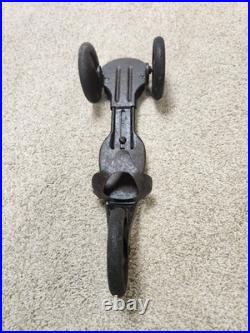
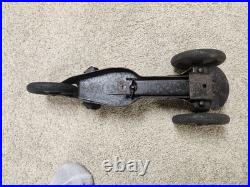
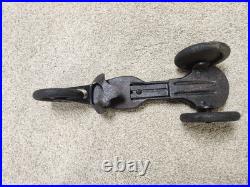
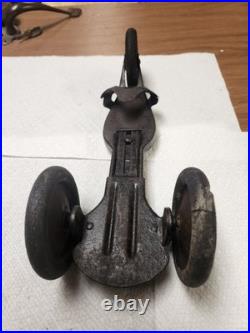
Rare vintage toy scooter called a Scooter Skate. Kind of a cross between a 3 wheel skate and a scooter. This is the first one I have ever seen. It has an extendable length. The rubber tires on this one are kind of cracked. It does have some rust. It looks like it says Brinkman Eng Co. ” below where it says “Scooter Skate. The wheels all still turn. It is about 14″ in length and 5″ wide at the back wheels. Very neat old toy.
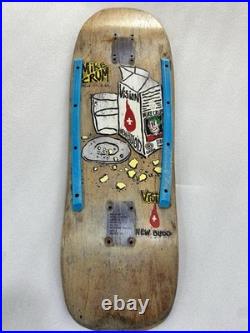
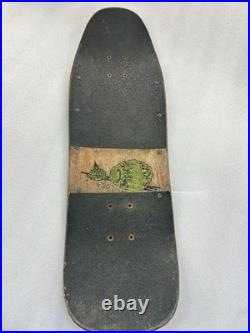
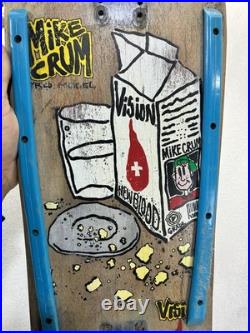
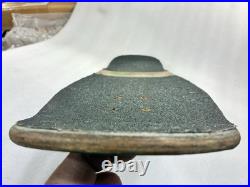
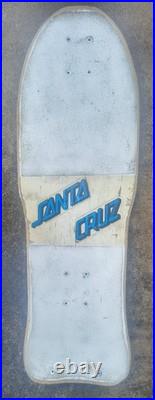
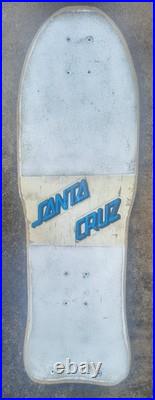
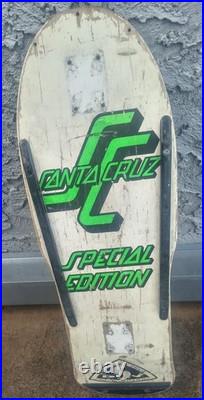
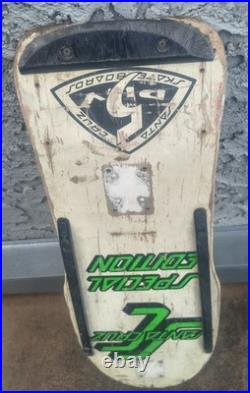
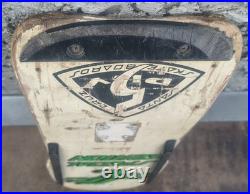
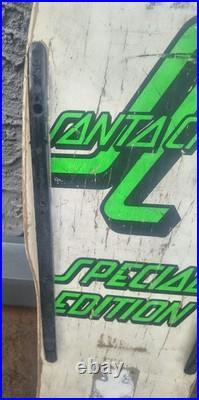
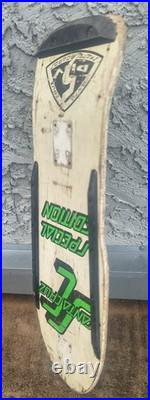
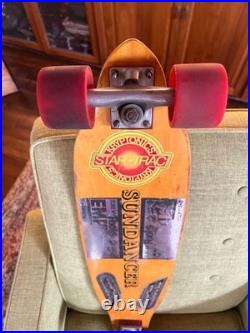
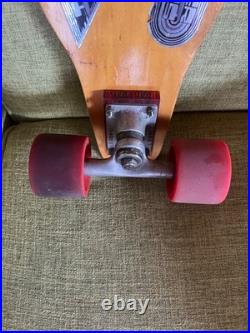
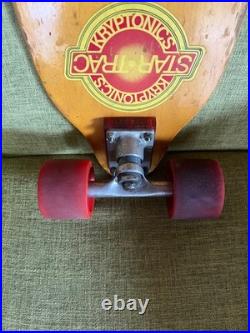
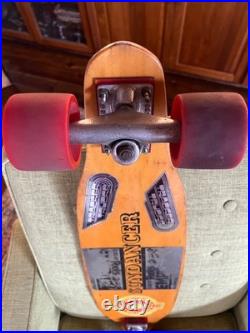
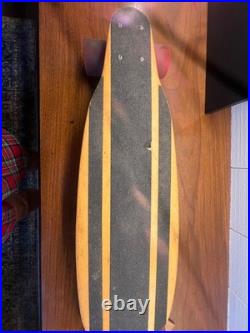
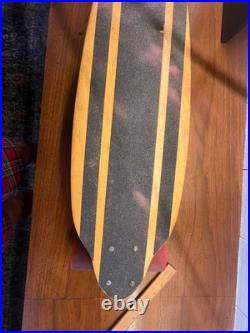
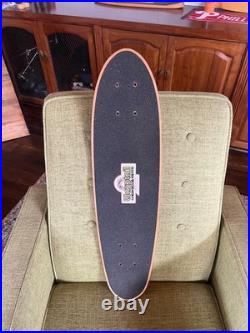
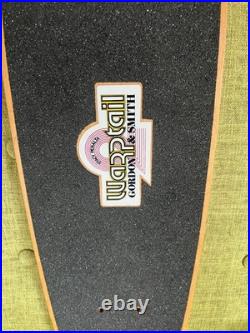
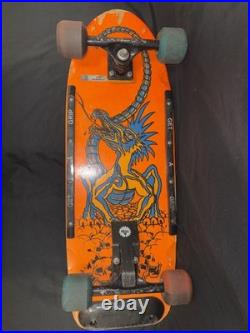
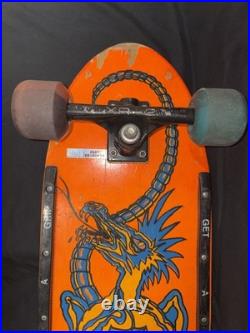
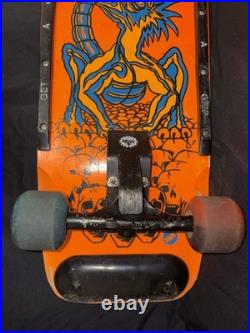
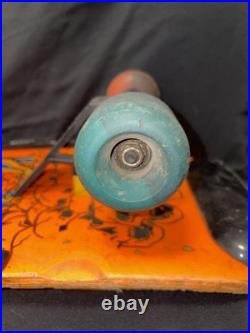
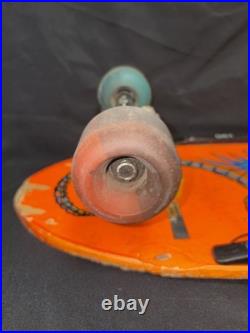
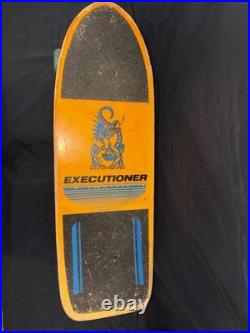
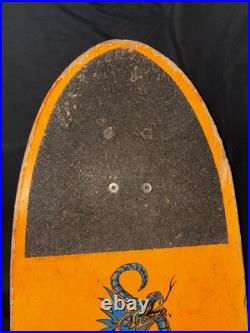
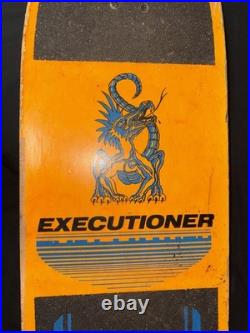
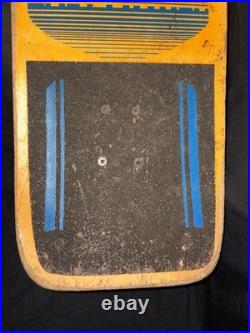
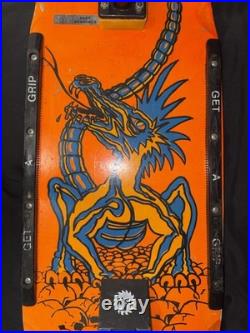
The title and pictures pretty much say it all here. This classic 1980s skateboard is ready to join a new collection. It is missing the nose guard. Everything is in good condition and you can ride it. It will make a nice addition to any collection. Comes from a smoke free home. Feel free to ask any questions.