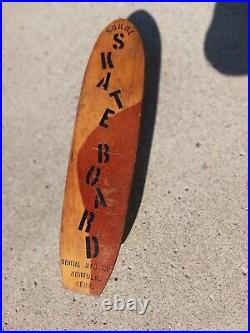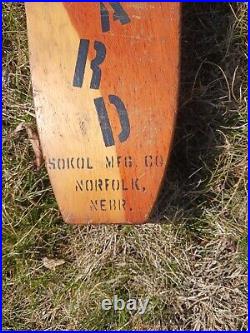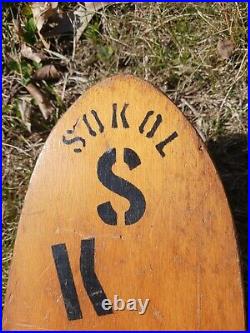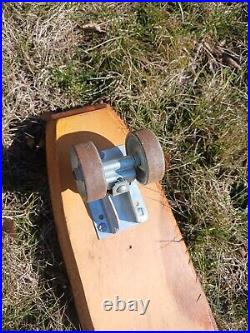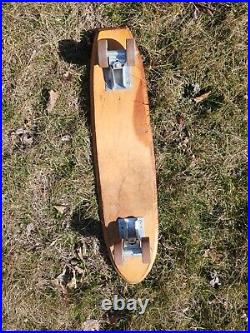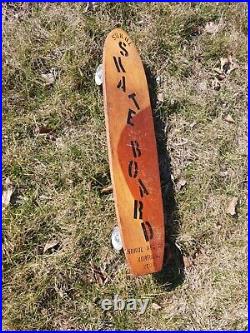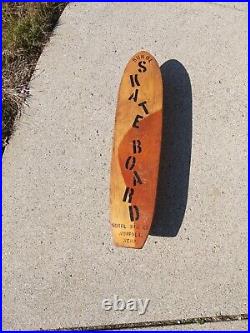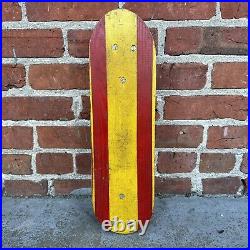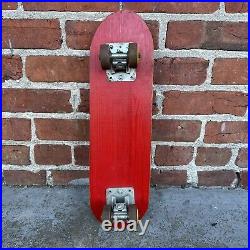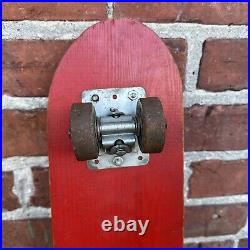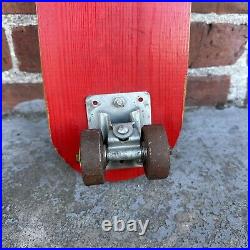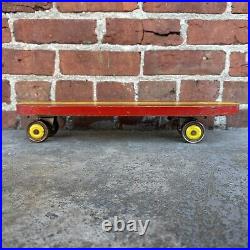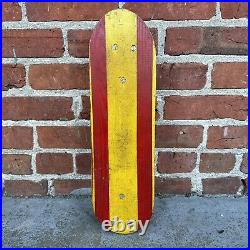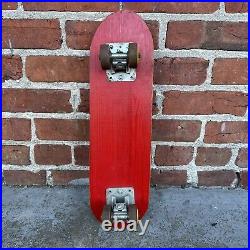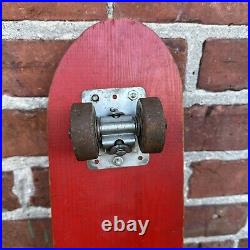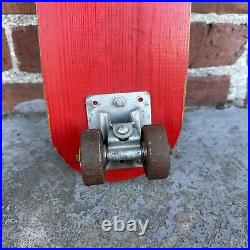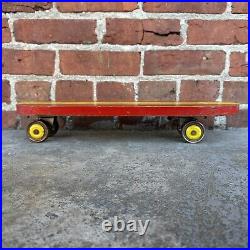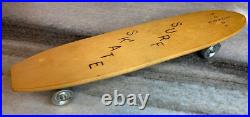

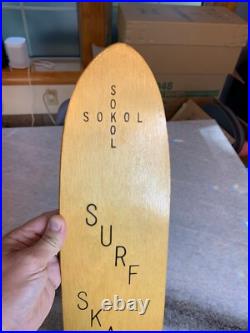
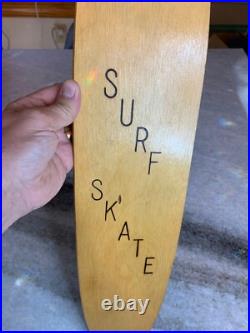

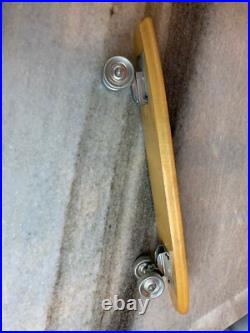
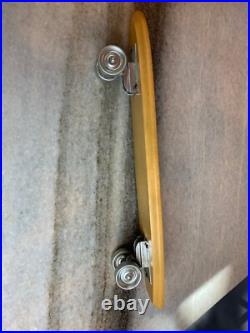
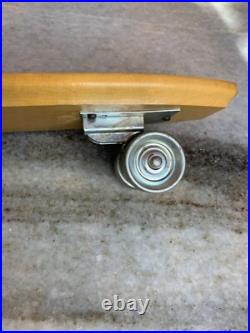
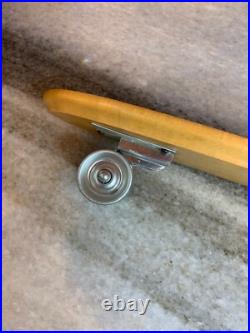
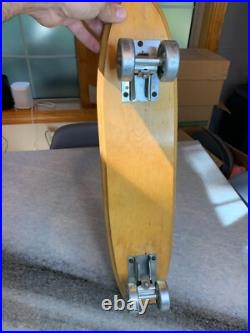
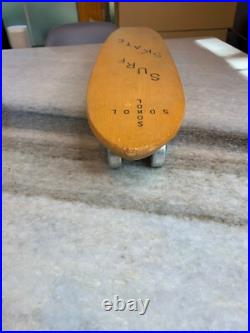
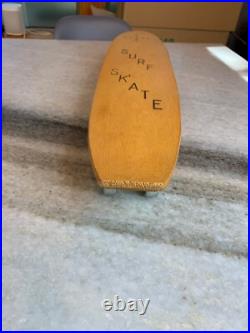

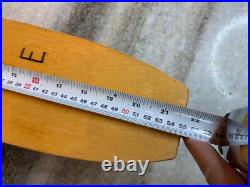
A piece of Americana! An early wooden skateboard with metal wheels that was there to witness the entire birth of the industry! Circa 1960 hailing from Norfolk, Nebraska. 21.75″ L x 5″ W. Skateboarding was initially marketed to surfers as a cheaper/easier way to practice surfing aka “sidewalk surfing”.. Imagine writing these gnarly, little, metal wheels, down a steep tarred hill in California! However, before skateboards there were scooters, sometimes known as kick scooters and push scooters. Varied forms of scooters have been traced back to the early 1900s, most of them made from wood, metal, or a combination of the two. Scooters had anywhere from two to four wheels. Some of the wheels were metal and others were similar to the wheels on pedal cars. In the 1940s and 1950s, crate scooters made popular sidewalk vehicles. Most crate scooters were handmade. They were relatively inexpensive and simple for kids to construct by using a milk crate or wooden fruit box and metal roller skate wheels attached to a wooden 2 x 4. Eventually kids started removing the boxes and handlebars and just started riding the board with wheels, reminiscent of the famous skateboard scene in the 1985 film. Back to the Future. Trade sheet, about 1960, from The Stephen and. Diane Olin Toy Catalog Collection, The Strong, Rochester. By the early 1960s, skateboarding started luring participants from the surfer scene. In 1962 a southern California surf shop, Val Surf, began making its own brand of skateboards and struck a deal with Chicago Roller Skate Company for the wheels. The skateboards began to attract everyday surfers who could use the boards when they weren’t in the water, and thus the term “sidewalk surfer” was coined. Additionally, skateboarding gained popularity when Larry Stevenson, publisher of. Promoted it in his monthly magazine. In 1963, Stevenson made the first professional skateboards using the Makaha brand and organized the first known skateboarding contest. That same year saw an evolution in skateboard design with the use of clay (also known as composite) wheels that replaced treacherous metal ones. Moving ahead, in 1964 surf and sailing entrepreneur Hobart “Hobie” Alter joined forces with Vita-Pakt company to make a line of Hobie skateboards; the Hobie line also sponsored several contests and professional skaters. Later that summer, the musical group Jan and Dean performed Sidewalk Surfin. On Dick Clark’s. An event which helped further popularize skateboarding with mainstream society. In 1965, the skateboarding sport peaked as manufacturers tried to keep up with the demand, cranking out an estimated 50 million skateboards between 1963 and 1965. In May, the world’s first skatepark, Surf City in Tucson, Arizona opened to the public.. But Thompson didn’t know until recently that his hometown has a history with the sport and leisure activity that dates almost as far back as the beginning of skateboarding itself. Sokol Surf Skates – a brand of wooden skateboards featuring burnt-engraved lettering – were made in Norfolk in the mid- to late 1960s by a fledgling company called Sokol Manufacturing. Thompson stumbled across the obscure bit of trivia after seeing a photo posted by one of his childhood heroes, professional skateboarder Steve Caballero. “He has an enormous collection of all these different skateboards, ” Thompson said of the famous skater. (One) is stamped with’Norfolk, Nebraska,’ so I asked him about it. Thompson said Caballero told him that rare brand of board was manufactured in Norfolk, to which Thompson replied, That’s where I’ve lived my whole life, and I’ve never heard of this. According to the Daily News archives, Sokol Surf Skates were the first products made when Sokol Manufacturing began operation in Norfolk in April 1965. The plant – owned by Leo Sokol – was located south of the Elkhorn River..