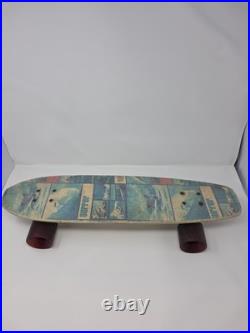
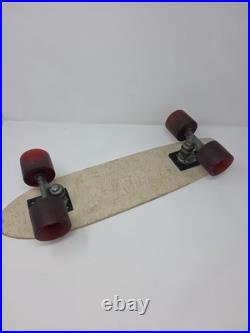
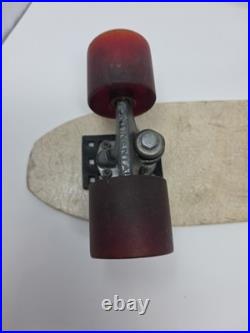
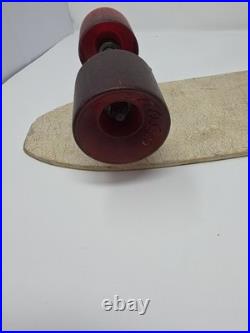
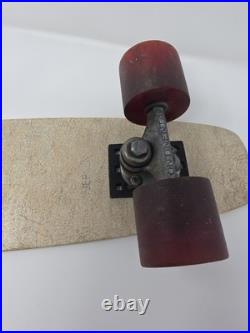
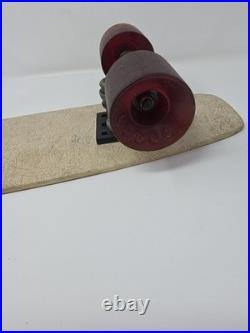
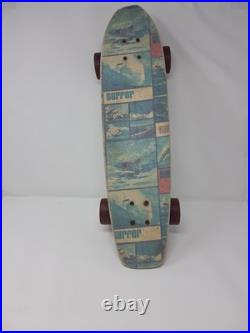
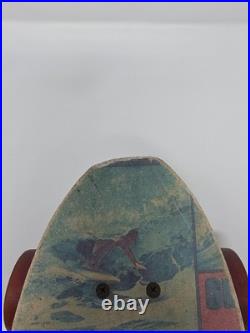
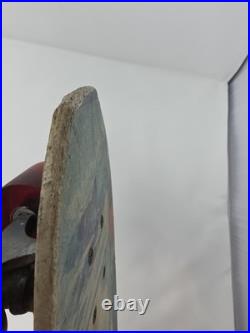
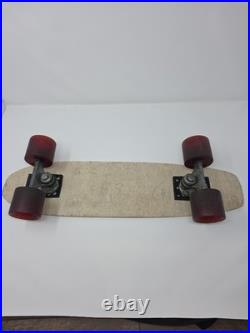
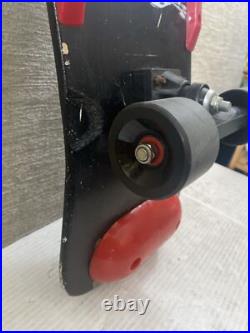
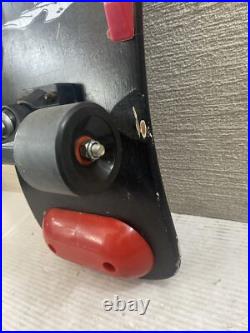
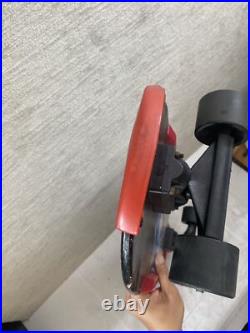
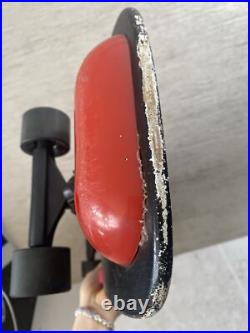
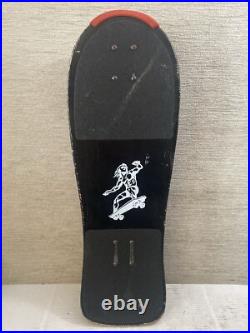
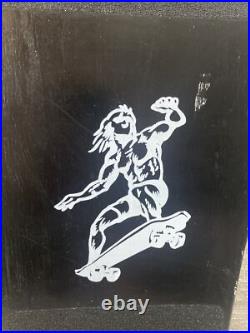
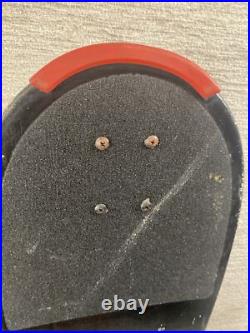
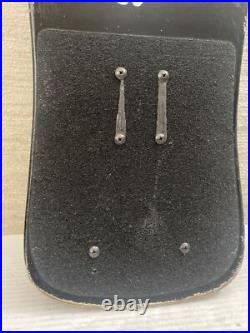
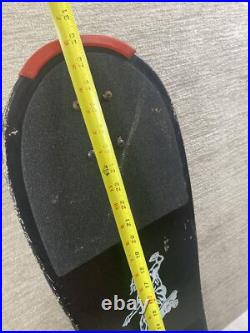
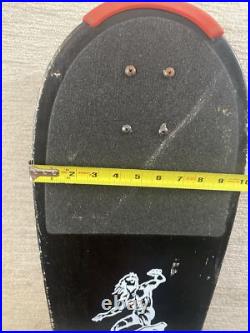
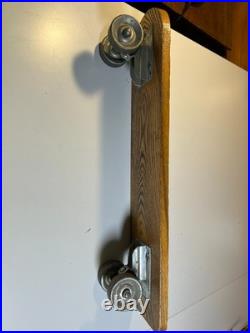
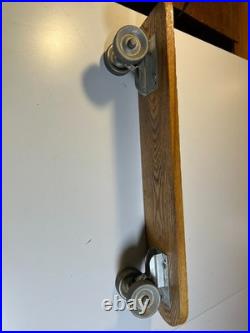
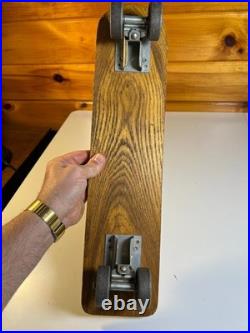
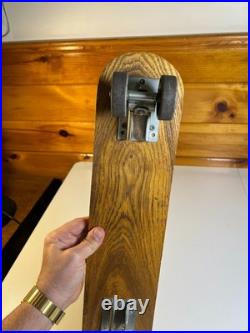
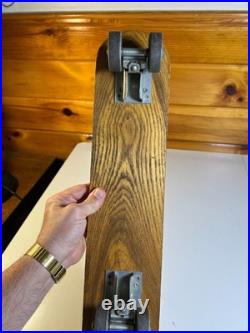
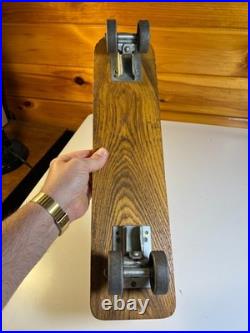
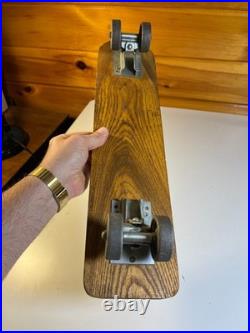
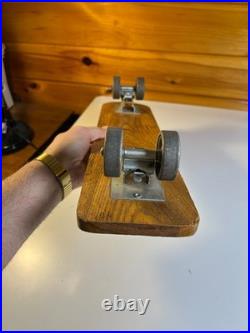
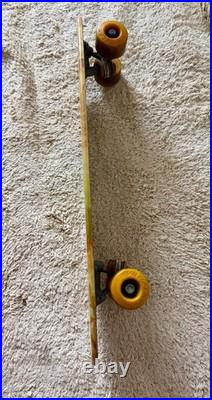
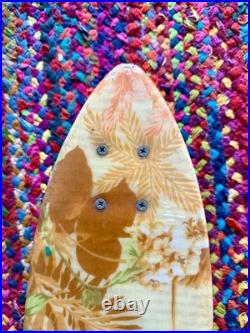
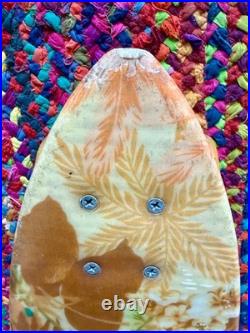
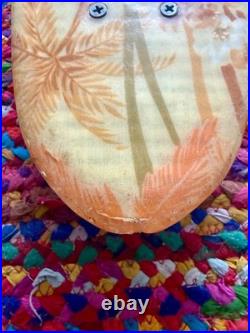
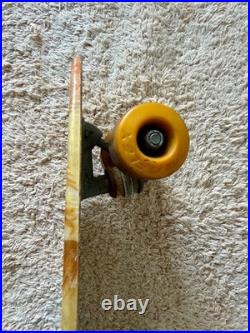
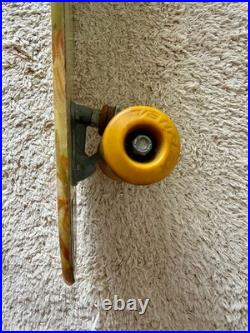
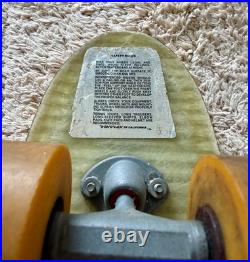
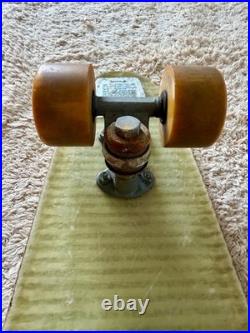
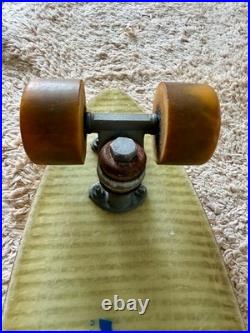
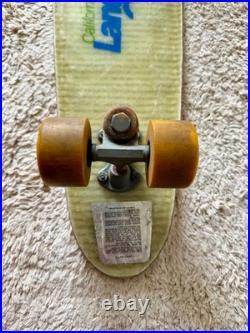
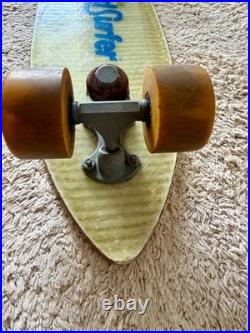
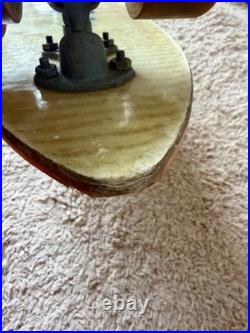
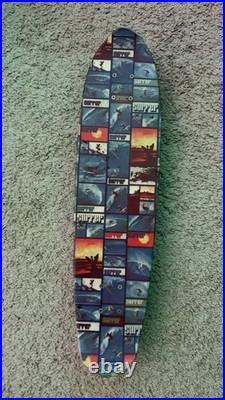
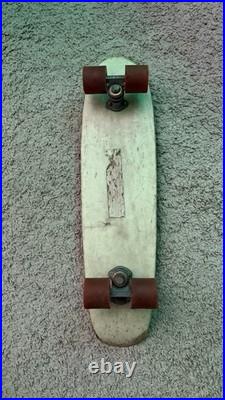
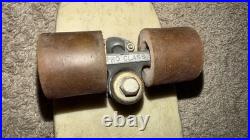
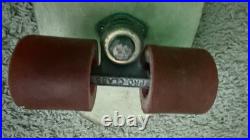
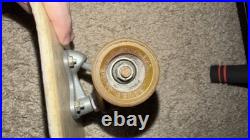
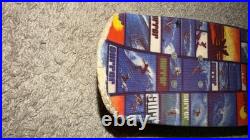
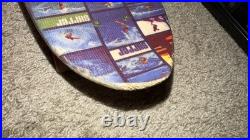
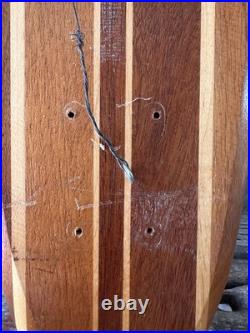
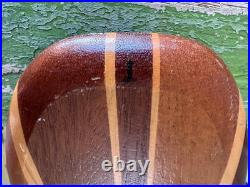
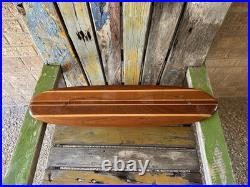
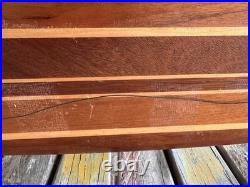
Won’t see many of these come around. Special edition Continental skateboard for Surfer Magazine. Some wear all around and damage on tip. Rolls if standing on it but is stiff. Continental trucks and C5000 wheels.
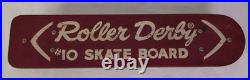
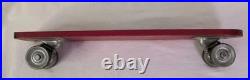
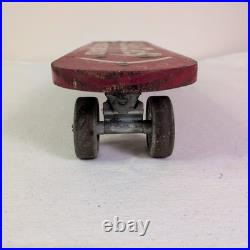
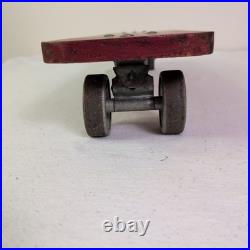
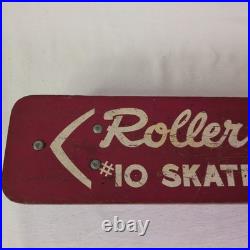
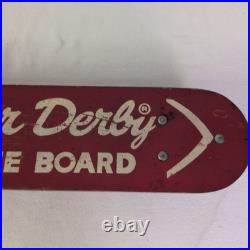
The Vintage Roller Derby 10 Skateboard is a stylish and nostalgic piece perfect for those who appreciate retro skateboarding culture. Made with a durable red wood construction and featuring classic clay wheels, this 19 inch skateboard is ideal for cruising on sidewalks or skater parks. With its United States craftsmanship and Roller Derby branding, this board captures the essence of 70s skateboarding style. Perfect for outdoor sports enthusiasts looking to add a touch of vintage flair to their skateboarding experience.
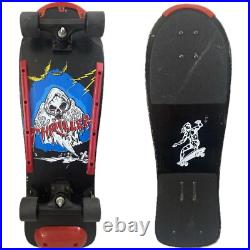
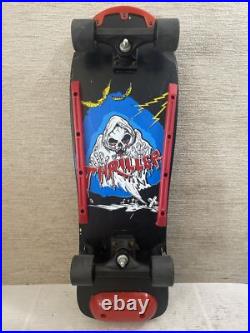
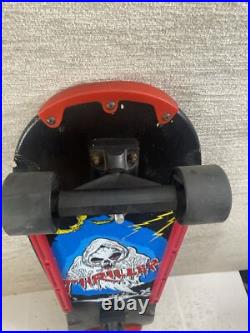
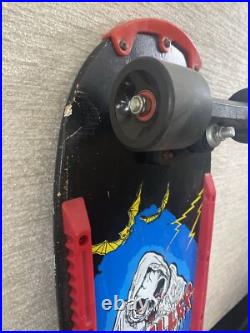
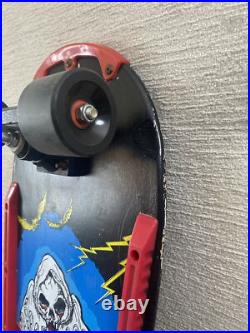
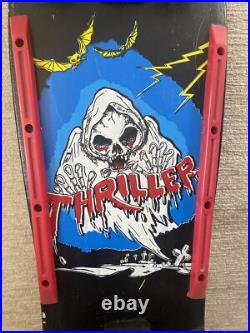
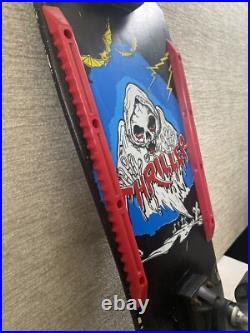
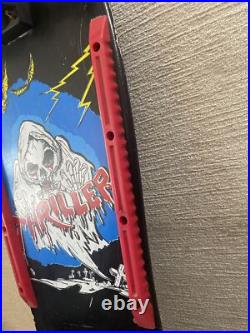
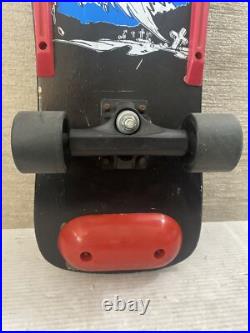
Vintage 80s THRILLER Grim Reaper Skateboard Surfer Concave Black Red RARE WORKS EUC. Condition: This is pre-owned, but it’s in good vintage condition. There are no serious damages. This has been tested and it works. Please see photo for more details.
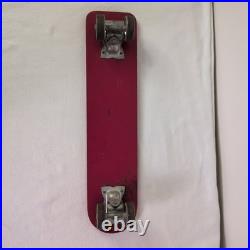
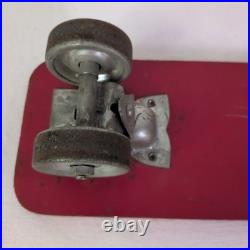
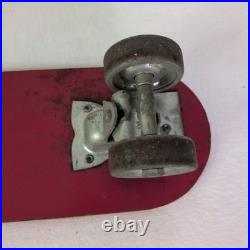
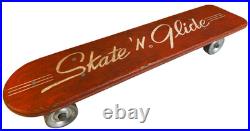
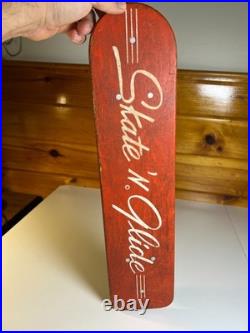
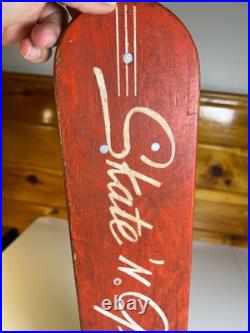
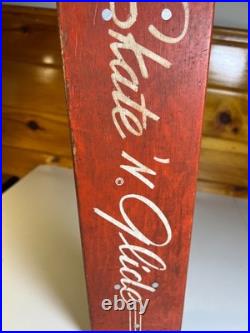
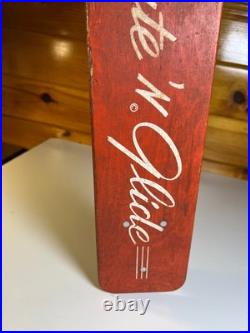
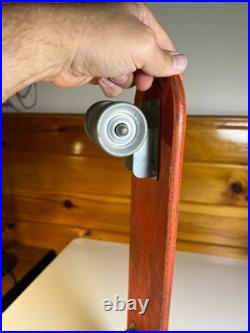
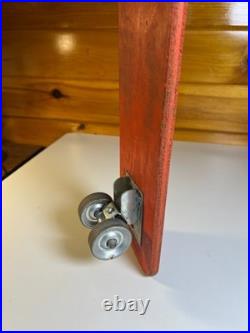
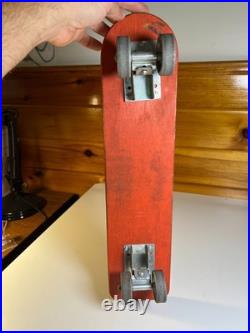
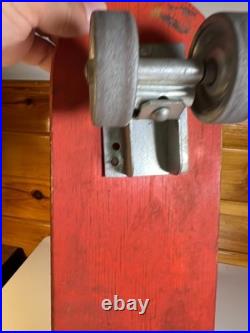
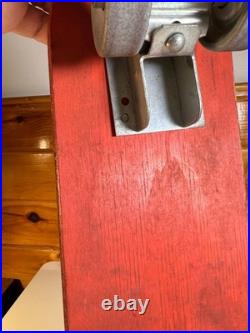
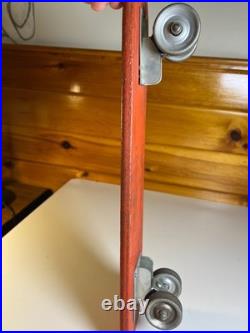
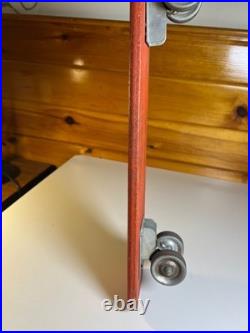
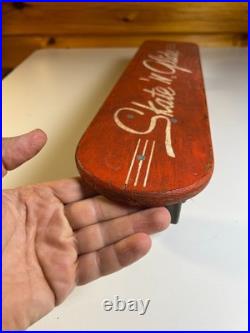
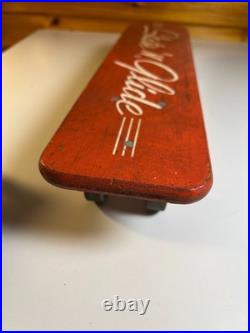
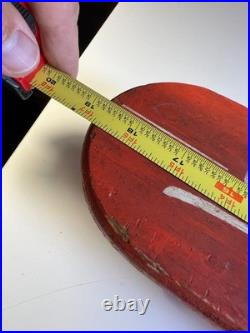
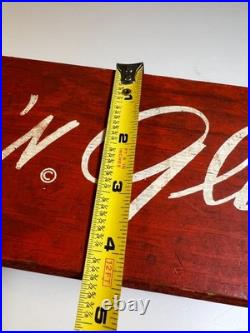
Vintage 1960s Skate’N Glide Wooden Skateboard – Original Red Paint – Steel Wheels – Early Sidewalk Surfer. Fantastic original survivor from the formative years of American skateboarding! Offered here is an original Skate’N Glide wooden skateboard, measuring approximately 19″ long x 4 1/2″ wide, retaining its wonderful original red-painted wooden deck, cream-colored script graphics, original early-style metal trucks and hard steel/metal wheels. This is the kind of skateboard that existed before the modern skateboard had really been figured out. An Early Piece of Skateboarding History. Skateboarding emerged as an offshoot of California surf culture during the late 1950s and exploded in popularity during the early-to-mid 1960s. Early boards were commonly marketed as “sidewalk surfboards” – essentially a way for young surfers and would-be surfers to imitate carving a wave when the ocean wasn’t cooperating. “Skate N’ Glide” is one of the period names documented among these early steel-wheel boards. The Skateboard Museum specifically references Skate N’ Glide among the memorable model names of the 1960s steel-wheel era. And these early boards were primitive. There were no urethane wheels, precision skateboard bearings, kicktails or sophisticated modern trucks. The earliest commercial boards were little more than narrow wooden decks riding on hardware derived from roller-skating technology. This example captures that era beautifully. The top retains its very attractive original red painted finish with large cream/white. Script across the deck. Simple linear speed-stripe decorations appear at each end, along with the original exposed metal fasteners. The lettering has that unmistakable early-1960s recreational-product look – halfway between a bowling alley sign, a roller rink and something you’d expect to see leaning against a California surf shop. The red finish shows honest scattered wear, scratches and small areas of paint loss, but that is exactly what you want on one of these. It has not been refinished or made artificially pretty. The graphics remain unusually strong and readable. Underneath are the original-style stamped sheet-metal truck assemblies and hard metal wheels characteristic of the earliest generation of commercially produced skateboards. Modern skateboarders accustomed to soft urethane wheels should appreciate just how wild these things were. Steel wheels offered essentially no forgiveness over cracks, pebbles and rough pavement. A stone that today’s skateboard would simply roll over could abruptly introduce a 1960s rider to the sidewalk. They earned the era’s reputation. The compact 19″ x 4 1/2″ deck further emphasizes just how closely these earliest skateboards were related to roller-skate technology rather than the much larger purpose-designed boards that followed. Better-than-average original condition for an early steel-wheel skateboard. The wooden deck remains solid and displays very well. Original red finish and cream graphics remain strong, with expected scratches, scuffs, edge wear, paint loss and other signs of actual period use. The trucks and wheels remain present and appear original to the board. Important: On the truck located closest to the front of the board, one mounting rivet is loose where it attempts to secure/grab the truck mounting plate – specifically the lower/left rivet as shown in the photographs. The hardware is being left completely as found rather than altered or repaired Perfectly secure if hanging, e. Please examine the detailed photographs closely, as they form an important part of the condition description. 19″ L x 4 1/2″ W. A Great Early Skateboarding Display Piece. The appeal here goes well beyond simply being an old skateboard. This represents the period when skateboarding was still being invented – before urethane wheels revolutionized the sport in the 1970s, before skateparks, before Tony Alva and the Dogtown generation, and decades before skateboarding became a worldwide industry and Olympic sport. The diminutive wooden deck, brutally unforgiving metal wheels, stamped trucks and wonderfully optimistic “Skate’N Glide” graphics are pure early skateboarding. And unlike a stripped or heavily deteriorated example, this one still has the visual punch that makes these early boards terrific wall displays.
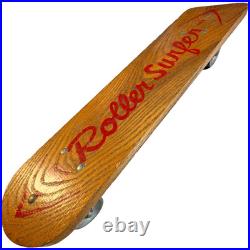
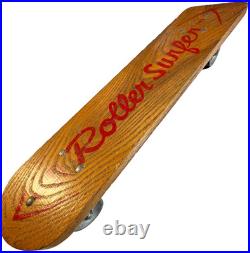
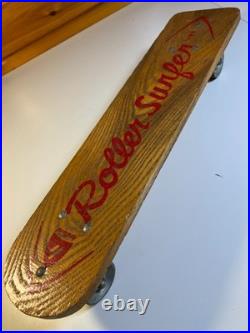
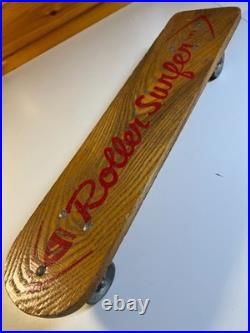
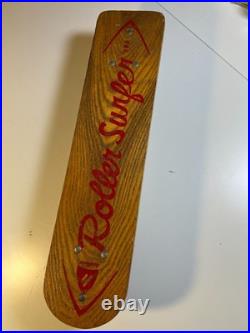
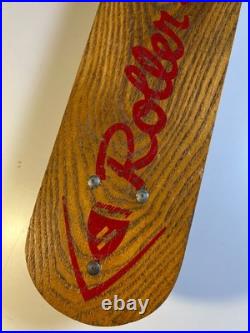
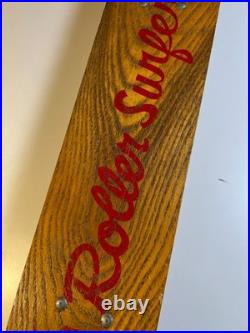
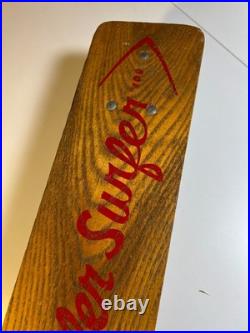
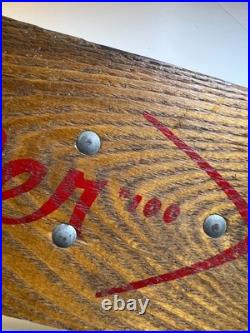
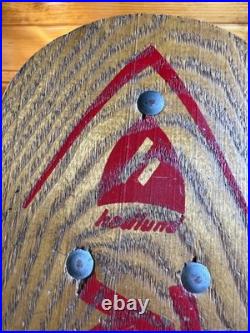
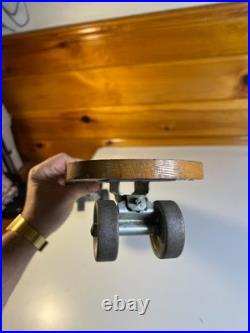
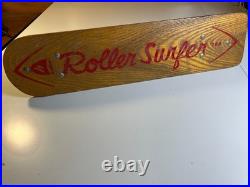
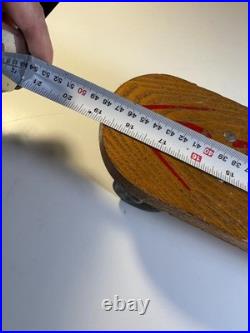
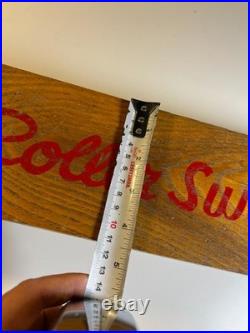
Vintage Hedlund Roller Surfer No. 100 Wooden Skateboard Sidewalk Surfboard 19 Early 1960s NOS. One of the Missing Links in Skateboarding History. Long before kickflips, urethane wheels, or California skate parks, there were pioneering boards like this. This Hedlund Roller Surfer No. 100 is not merely an old toy-it is one of the formative stepping stones in the evolution of modern skateboarding. Produced during the earliest years of the skateboard craze by Hedlund Manufacturing of Nokomis, Illinois, this model belongs to a generation of boards that helped transform the simple idea of “sidewalk surfing” into what would become a worldwide sport and cultural phenomenon. Without experimental boards like the Roller Surfer, there would have been no Zephyr team, no Dogtown revolution, no Tony Hawk, and no billion-dollar skateboard industry. This is history in its rawest, simplest form: a plank of hardwood, four steel wheels, and an idea decades ahead of its time. Measuring approximately 19 inches long by 4.5 inches wide, this is the desirable No. 100 model featuring the iconic flowing red “Roller Surfer” script and Hedlund shield emblem. The board presents in remarkable condition and appears to have seen little, if any, actual use. The original varnished hardwood retains a rich golden tone with striking grain throughout, while the graphics remain bold and highly legible. The steel wheels show minimal wear, giving the entire piece the appearance of old dealer stock or an exceptionally well-preserved example. Finding an early Roller Surfer is uncommon. Finding one that still looks this good is considerably rarer. The Birth of Sidewalk Surfing. The early 1960s witnessed one of the most fascinating transitions in recreational history. Inspired by surfers looking for something to do when the waves were flat, manufacturers across America began experimenting with wheeled boards. Hedlund, already respected for its sporting goods, entered this emerging market with its Roller Surfer line. These primitive boards demanded balance, nerve, and commitment. Steel wheels transmitted every crack in the pavement directly to the rider, and their narrow hardwood decks offered little forgiveness. Yet these machines captured imaginations and introduced thousands of children to a completely new way of moving. Within only a few years, these humble designs would evolve into laminated maple decks, precision trucks, clay wheels, and eventually the polyurethane revolution that forever changed skateboarding. This board stands at that pivotal moment-where homemade ingenuity became commercial innovation. Authentic Hedlund Roller Surfer No. Manufactured in Nokomis, Illinois. Approximately 19″ long × 4.5″ wide. Solid hardwood deck with beautiful original finish. Original red Roller Surfer graphics. Original Hedlund shield logo. Excellent preservation with minimal signs of use. Superb display piece for skateboarding, surfing, or Americana collections. Overall excellent vintage condition. The original finish remains attractive with beautiful wood grain and vibrant graphics throughout. The wheels exhibit minimal wear, suggesting extremely light use or careful long-term storage. It displays wonderfully and would be difficult to upgrade. Many people think skateboarding began in California during the 1970s. In reality, boards like this laid the foundation nearly a decade earlier. The Hedlund Roller Surfer belongs to the pioneering first generation that proved the concept of sidewalk surfing could become a legitimate pastime. Every modern skateboard traces its lineage back to simple hardwood machines like this one. Collectors often focus on flashy graphics or famous pro models, but historians recognize these early production boards as the true ancestors of the sport. Surviving examples in near-original condition are becoming increasingly difficult to find, making this not only a fantastic display piece but an important artifact from the dawn of skateboarding itself.
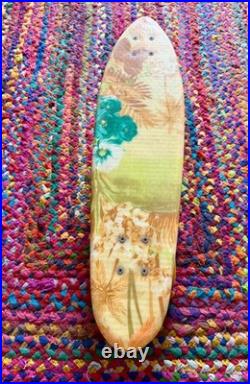
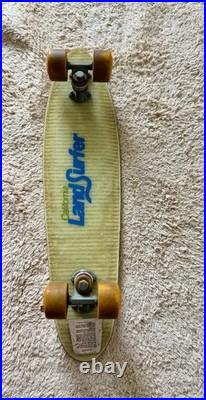
Original 1977 Variflex California Land Surfer fiberglass complete with factory Hawaiian floral laminate, original Variflex trucks and wheels. Ultra rare vintage skateboard collectible in excellent condition.
It’s in good shape. Slight cosmic wear on the nose and tail but otherwise great. The 1970′s Surfer Pro-Class Vintage Fiberglass Skateboard is a rare find from the United States, featuring a distinctive 70s theme and designed for surfing on sidewalks. Made by Promo/Surfer Magazine, this skateboard is a piece of history that embodies the retro style of skateboarding in the era. With its durable fiberglass construction and vintage charm, this skateboard is a must-have for collectors and enthusiasts of classic surf and skate culture.
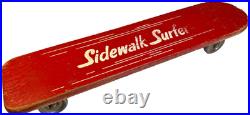
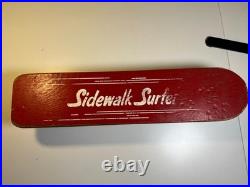
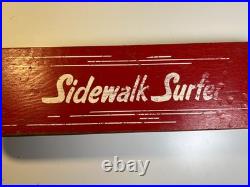
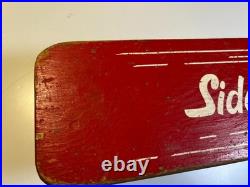
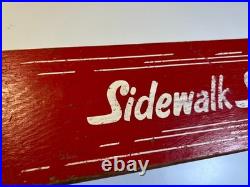
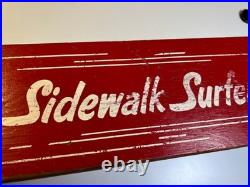
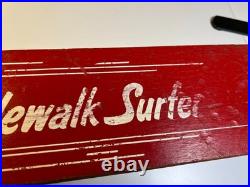
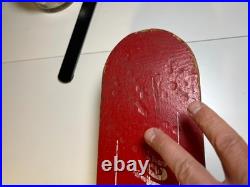
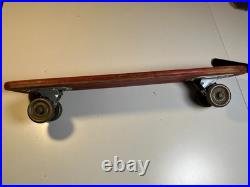
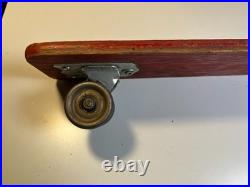
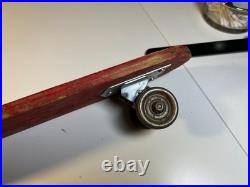
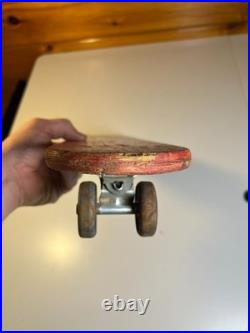
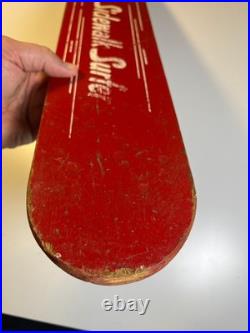
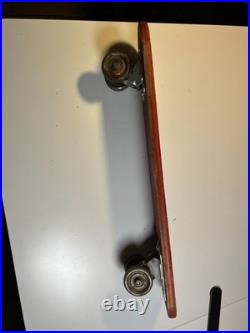
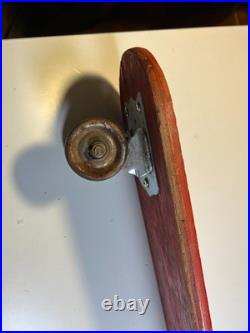
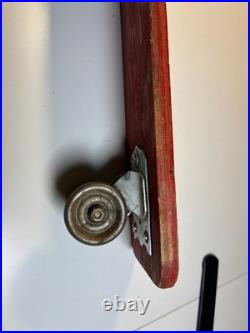
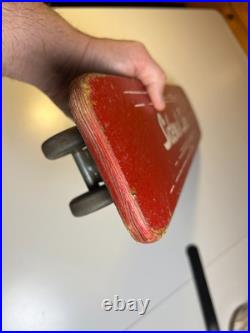
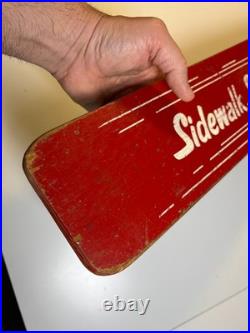
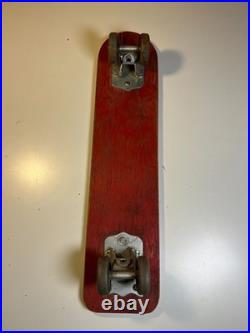
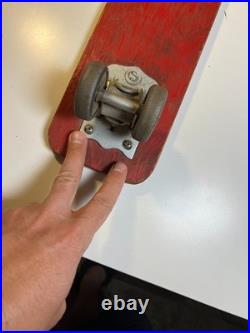
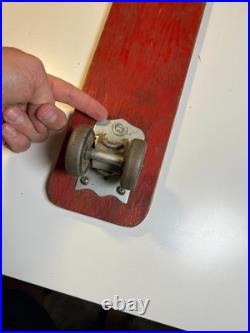
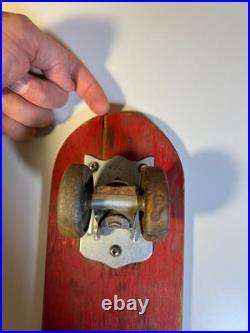
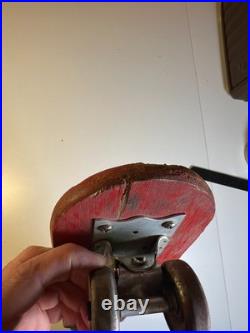
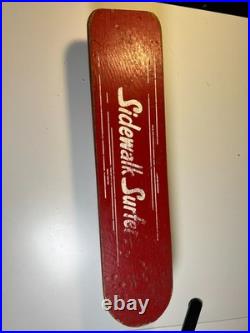
This is a neat survivor. The dimensions, solid wood deck, steel trucks, and especially those metal wheels place it firmly in the very early era of commercial skateboards. The deck is a simple plank with rounded ends, before the kicktail era. The wheels are steel rather than clay or polyurethane. The “Sidewalk Surfer” graphic uses the exact marketing term that was commonly applied to skateboards when they were first becoming popular in America. The trucks appear factory-made rather than homemade, suggesting a commercial product rather than a garage-built board. The red painted deck with screened lettering is typical of inexpensive department store and sporting goods store skateboards from the period. Collectors like these because they represent skateboarding’s first boom. The progression generally went. Homemade crate scooters and roller-skate conversions (1940s-1950s). Steel-wheel “Sidewalk Surfer” boards like yours (late 1950s-early 1960s). Honest wear without restoration. Note one truck has mis-matched, replacement screws. Please note the small, round, dents on the nose of the board (see finger point pics). Measures approximately 18.75″ long x 4.25″ wide x 3.25 high and weighs 2.12 pounds. The name came from the fact that skateboarding was invented by surfers who wanted something to ride when the ocean was flat. In the late 1950s and early 1960s, manufacturers and magazines often described skateboards as. “Surfing on the sidewalk”. The rider stood sideways, shifted weight much like a surfer, and carved turns in a similar fashion. The idea was essentially a surfboard with wheels. In fact, many of the earliest skateboards weren’t even called skateboards at all. Advertisements used names such as. What’s particularly cool about your board is that the graphic doesn’t say “Skateboard” at all-it says Sidewalk Surfer. That strongly suggests it dates from the very earliest commercial era, before the industry had fully standardized the name. The phrase itself was so iconic that in 1965 the documentary-style skateboarding film. Was originally released under the title “Sidewalk Surfer” in some markets, and skateboarding magazines routinely referred to riders as sidewalk surfers. Your board is basically from the era when skateboarding was still considered an offshoot of surfing rather than its own sport. That’s a big part of its charm to collectors today.
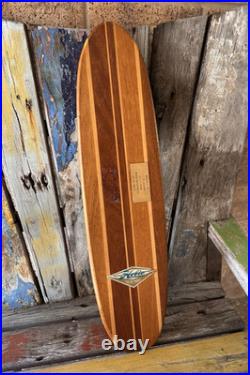
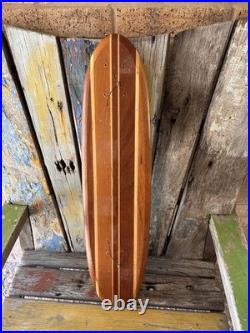
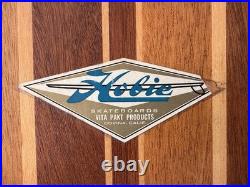
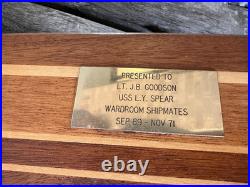
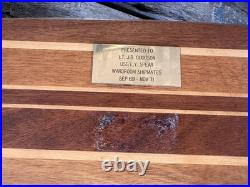
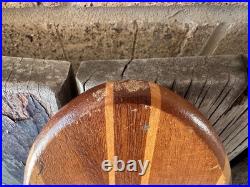
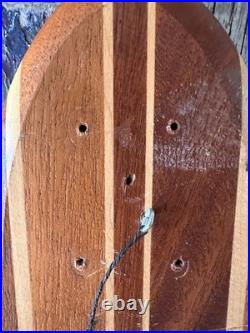
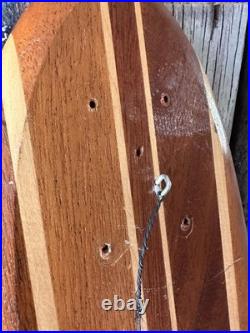
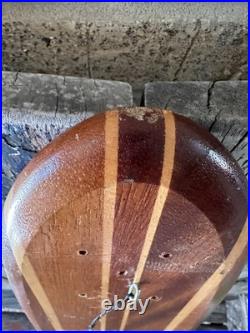
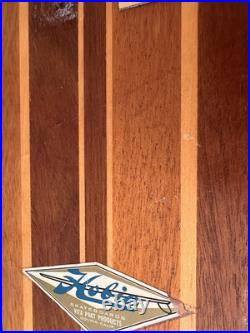
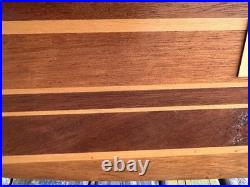
This is an original 1960s Hobie Super Surfer 25 skateboard deck with original decal and 9 stripes of various woods. This deck was turned into a plaque and presented to Lt JB Goodson aboard the USS L Y Spear November 1970. An engraved brass plate commemorating the event is still affixed, and there is some remaining residue from a second brass plate (unknown details) below it. Original lacquer is present, with some minimal wear to edges from prior use. The deck is overall in great condition and could very easily be refinished – no major dings, no cracks. The original trapezoidal decal is still attached, with one corner missing (see photo). Original screw holes from the removed trucks are on the bottom. Two eye hooks with picture wire were added for hanging and are still attached. There are several spots on the bottom that appear to be lacquer pull from duct tape or similar. Overall, a great vintage piece.