Vintage 1960s Skate’N Glide Skateboard Wooden Wood Steel Wheels Sidewalk Surfer

Vintage 1960s Skate'N Glide Skateboard Wooden Wood Steel Wheels Sidewalk Surfer

Vintage 1960s Skate'N Glide Skateboard Wooden Wood Steel Wheels Sidewalk Surfer

Vintage 1960s Skate'N Glide Skateboard Wooden Wood Steel Wheels Sidewalk Surfer

Vintage 1960s Skate'N Glide Skateboard Wooden Wood Steel Wheels Sidewalk Surfer

Vintage 1960s Skate'N Glide Skateboard Wooden Wood Steel Wheels Sidewalk Surfer

Vintage 1960s Skate'N Glide Skateboard Wooden Wood Steel Wheels Sidewalk Surfer

Vintage 1960s Skate'N Glide Skateboard Wooden Wood Steel Wheels Sidewalk Surfer

Vintage 1960s Skate'N Glide Skateboard Wooden Wood Steel Wheels Sidewalk Surfer

Vintage 1960s Skate'N Glide Skateboard Wooden Wood Steel Wheels Sidewalk Surfer

Vintage 1960s Skate'N Glide Skateboard Wooden Wood Steel Wheels Sidewalk Surfer

Vintage 1960s Skate'N Glide Skateboard Wooden Wood Steel Wheels Sidewalk Surfer

Vintage 1960s Skate'N Glide Skateboard Wooden Wood Steel Wheels Sidewalk Surfer

Vintage 1960s Skate'N Glide Skateboard Wooden Wood Steel Wheels Sidewalk Surfer

Vintage 1960s Skate'N Glide Skateboard Wooden Wood Steel Wheels Sidewalk Surfer

Vintage 1960s Skate'N Glide Skateboard Wooden Wood Steel Wheels Sidewalk Surfer

Vintage 1960s Skate'N Glide Skateboard Wooden Wood Steel Wheels Sidewalk Surfer

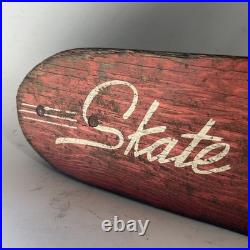
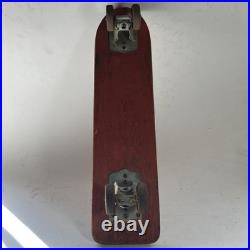
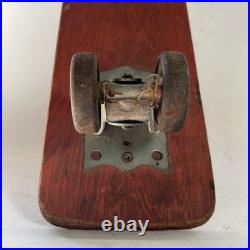
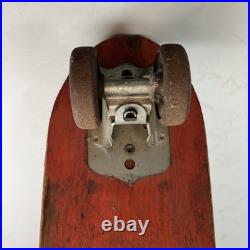
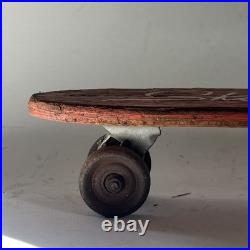
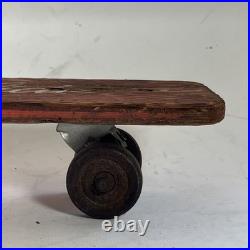
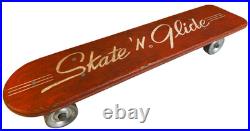
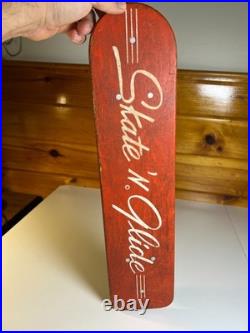
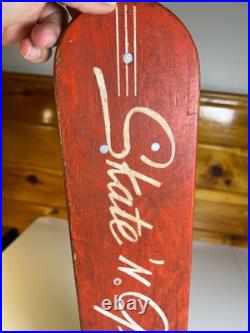
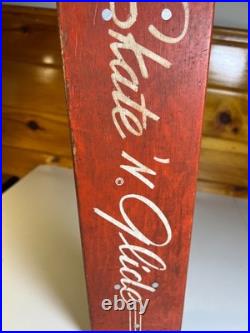
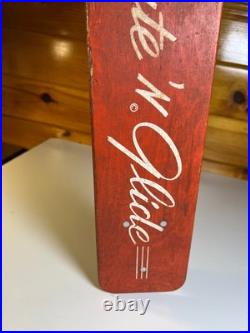
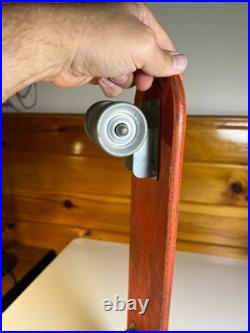
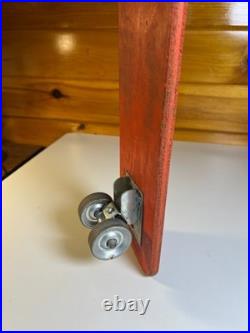
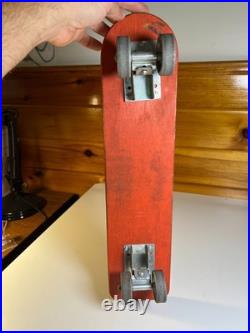
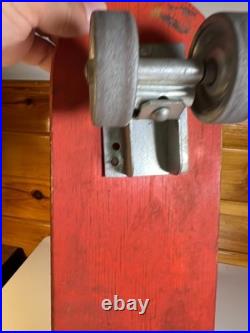
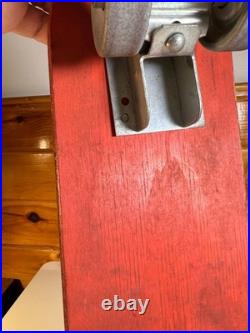
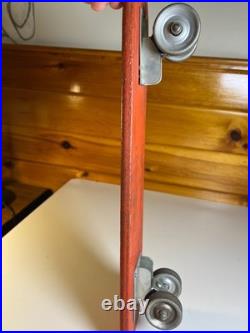
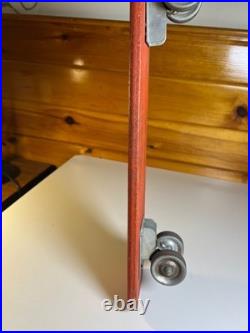
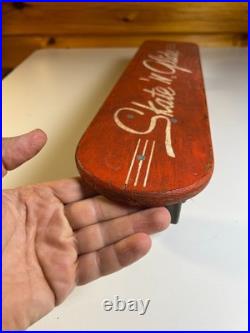
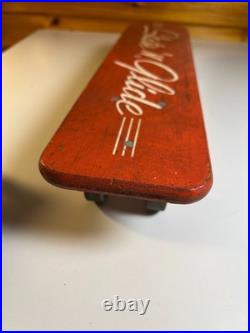
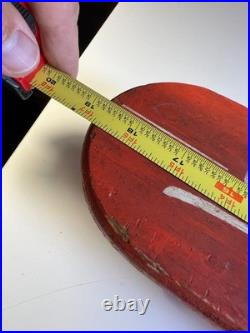
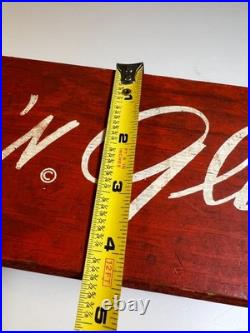
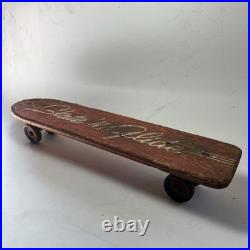
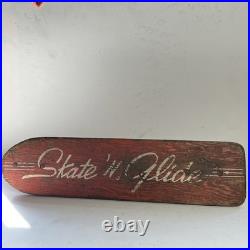
Vintage 1960s Skate’N Glide Wooden Skateboard – Original Red Paint – Steel Wheels – Early Sidewalk Surfer. Fantastic original survivor from the formative years of American skateboarding! Offered here is an original Skate’N Glide wooden skateboard, measuring approximately 19″ long x 4 1/2″ wide, retaining its wonderful original red-painted wooden deck, cream-colored script graphics, original early-style metal trucks and hard steel/metal wheels. This is the kind of skateboard that existed before the modern skateboard had really been figured out. An Early Piece of Skateboarding History. Skateboarding emerged as an offshoot of California surf culture during the late 1950s and exploded in popularity during the early-to-mid 1960s. Early boards were commonly marketed as “sidewalk surfboards” – essentially a way for young surfers and would-be surfers to imitate carving a wave when the ocean wasn’t cooperating. “Skate N’ Glide” is one of the period names documented among these early steel-wheel boards. The Skateboard Museum specifically references Skate N’ Glide among the memorable model names of the 1960s steel-wheel era. And these early boards were primitive. There were no urethane wheels, precision skateboard bearings, kicktails or sophisticated modern trucks. The earliest commercial boards were little more than narrow wooden decks riding on hardware derived from roller-skating technology. This example captures that era beautifully. The top retains its very attractive original red painted finish with large cream/white. Script across the deck. Simple linear speed-stripe decorations appear at each end, along with the original exposed metal fasteners. The lettering has that unmistakable early-1960s recreational-product look – halfway between a bowling alley sign, a roller rink and something you’d expect to see leaning against a California surf shop. The red finish shows honest scattered wear, scratches and small areas of paint loss, but that is exactly what you want on one of these. It has not been refinished or made artificially pretty. The graphics remain unusually strong and readable. Underneath are the original-style stamped sheet-metal truck assemblies and hard metal wheels characteristic of the earliest generation of commercially produced skateboards. Modern skateboarders accustomed to soft urethane wheels should appreciate just how wild these things were. Steel wheels offered essentially no forgiveness over cracks, pebbles and rough pavement. A stone that today’s skateboard would simply roll over could abruptly introduce a 1960s rider to the sidewalk. They earned the era’s reputation. The compact 19″ x 4 1/2″ deck further emphasizes just how closely these earliest skateboards were related to roller-skate technology rather than the much larger purpose-designed boards that followed. Better-than-average original condition for an early steel-wheel skateboard. The wooden deck remains solid and displays very well. Original red finish and cream graphics remain strong, with expected scratches, scuffs, edge wear, paint loss and other signs of actual period use. The trucks and wheels remain present and appear original to the board. Important: On the truck located closest to the front of the board, one mounting rivet is loose where it attempts to secure/grab the truck mounting plate – specifically the lower/left rivet as shown in the photographs. The hardware is being left completely as found rather than altered or repaired Perfectly secure if hanging, e. Please examine the detailed photographs closely, as they form an important part of the condition description. 19″ L x 4 1/2″ W. A Great Early Skateboarding Display Piece. The appeal here goes well beyond simply being an old skateboard. This represents the period when skateboarding was still being invented – before urethane wheels revolutionized the sport in the 1970s, before skateparks, before Tony Alva and the Dogtown generation, and decades before skateboarding became a worldwide industry and Olympic sport. The diminutive wooden deck, brutally unforgiving metal wheels, stamped trucks and wonderfully optimistic “Skate’N Glide” graphics are pure early skateboarding. And unlike a stripped or heavily deteriorated example, this one still has the visual punch that makes these early boards terrific wall displays.
RARE Vintage 1960s Wood Wooden Metal Steel Wheels Skateboard Skate’n Glide Surf

RARE Vintage 1960s Wood Wooden Metal Steel Wheels Skateboard Skate'n Glide Surf

RARE Vintage 1960s Wood Wooden Metal Steel Wheels Skateboard Skate'n Glide Surf

RARE Vintage 1960s Wood Wooden Metal Steel Wheels Skateboard Skate'n Glide Surf

RARE Vintage 1960s Wood Wooden Metal Steel Wheels Skateboard Skate'n Glide Surf

RARE Vintage 1960s Wood Wooden Metal Steel Wheels Skateboard Skate'n Glide Surf

RARE Vintage 1960s Wood Wooden Metal Steel Wheels Skateboard Skate'n Glide Surf

RARE Vintage 1960s Wood Wooden Metal Steel Wheels Skateboard Skate'n Glide Surf

RARE Vintage 1960s Wood Wooden Metal Steel Wheels Skateboard Skate'n Glide Surf

RARE Vintage 1960s Wood Wooden Metal Steel Wheels Skateboard Skate'n Glide Surf

RARE Vintage 1960s Wood Wooden Metal Steel Wheels Skateboard Skate'n Glide Surf

RARE Vintage 1960s Wood Wooden Metal Steel Wheels Skateboard Skate'n Glide Surf

RARE Vintage 1960s Wood Wooden Metal Steel Wheels Skateboard Skate'n Glide Surf

RARE Vintage 1960s Wood Wooden Metal Steel Wheels Skateboard Skate'n Glide Surf

RARE Vintage 1960s Wood Wooden Metal Steel Wheels Skateboard Skate'n Glide Surf

RARE Vintage 1960s Wood Wooden Metal Steel Wheels Skateboard Skate'n Glide Surf

RARE Vintage 1960s Wood Wooden Metal Steel Wheels Skateboard Skate'n Glide Surf

RARE Vintage 1960s Wood Wooden Metal Steel Wheels Skateboard Skate'n Glide Surf

RARE Vintage 1960s Wood Wooden Metal Steel Wheels Skateboard Skate'n Glide Surf

RARE Vintage 1960s Wood Wooden Metal Steel Wheels Skateboard Skate'n Glide Surf

RARE Vintage 1960s Wood Wooden Metal Steel Wheels Skateboard Skate'n Glide Surf

RARE Vintage 1960s Wood Wooden Metal Steel Wheels Skateboard Skate'n Glide Surf

A piece of Americana! 18.5″ L x 4.5″ W. Note that the metal mounts are heavily pitted and have some cosmetic rust; wheels are well used and bearings are getting loose. Skateboarding was initially marketed to surfers as a cheaper/easier way to practice surfing aka “sidewalk surfing”.. Imagine writing these gnarly, little, metal wheels, down a steep paved hill in California! However, before skateboards there were scooters, sometimes known as kick scooters and push scooters. Varied forms of scooters have been traced back to the early 1900s, most of them made from wood, metal, or a combination of the two. Scooters had anywhere from two to four wheels. Some of the wheels were metal and others were similar to the wheels on pedal cars. In the 1940s and 1950s, crate scooters made popular sidewalk vehicles. Most crate scooters were handmade. They were relatively inexpensive and simple for kids to construct by using a milk crate or wooden fruit box and metal roller skate wheels attached to a wooden 2 x 4. Eventually kids started removing the boxes and handlebars and just started riding the board with wheels, reminiscent of the famous skateboard scene in the 1985 film. Back to the Future. Trade sheet, about 1960, from The Stephen and. Diane Olin Toy Catalog Collection, The Strong, Rochester. By the early 1960s, skateboarding started luring participants from the surfer scene. In 1962 a southern California surf shop, Val Surf, began making its own brand of skateboards and struck a deal with Chicago Roller Skate Company for the wheels. The skateboards began to attract everyday surfers who could use the boards when they weren’t in the water, and thus the term “sidewalk surfer” was coined. Additionally, skateboarding gained popularity when Larry Stevenson, publisher of. Promoted it in his monthly magazine. In 1963, Stevenson made the first professional skateboards using the Makaha brand and organized the first known skateboarding contest. That same year saw an evolution in skateboard design with the use of clay (also known as composite) wheels that replaced treacherous metal ones. Moving ahead, in 1964 surf and sailing entrepreneur Hobart “Hobie” Alter joined forces with Vita-Pakt company to make a line of Hobie skateboards; the Hobie line also sponsored several contests and professional skaters. Later that summer, the musical group Jan and Dean performed Sidewalk Surfin. On Dick Clark’s. An event which helped further popularize skateboarding with mainstream society. In 1965, the skateboarding sport peaked as manufacturers tried to keep up with the demand, cranking out an estimated 50 million skateboards between 1963 and 1965. In May, the world’s first skatepark, Surf City in Tucson, Arizona opened to the public..