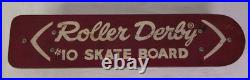
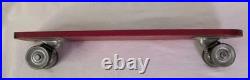
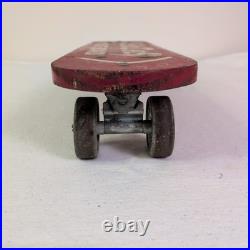
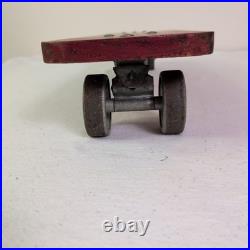
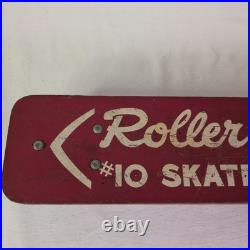
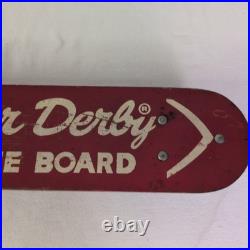
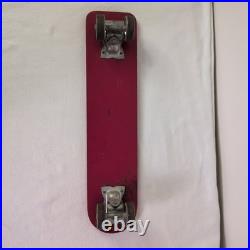
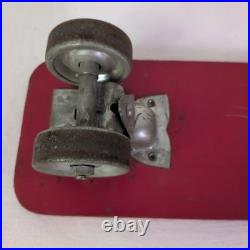
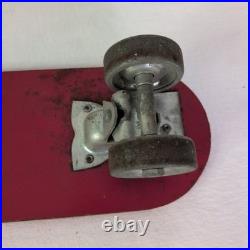
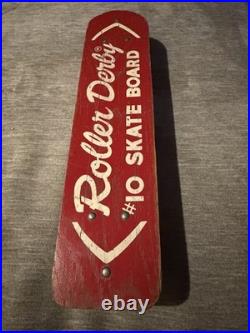
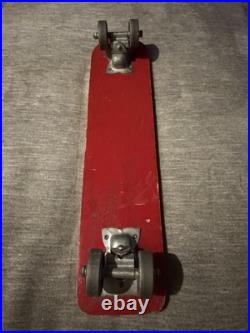
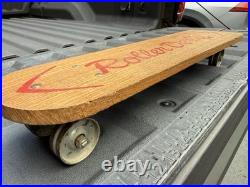
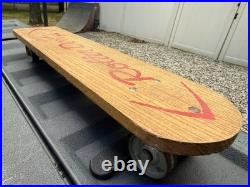
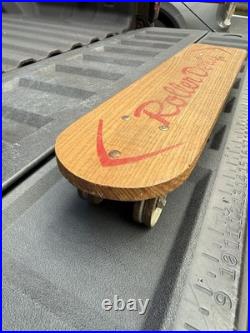
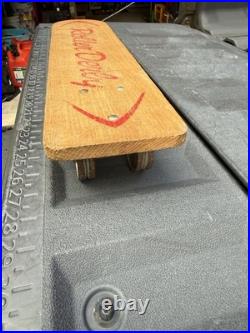
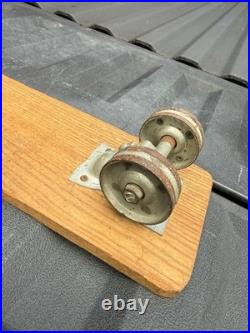
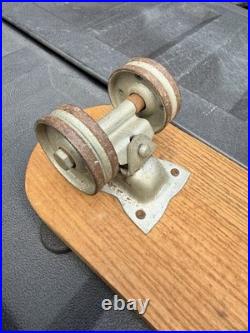
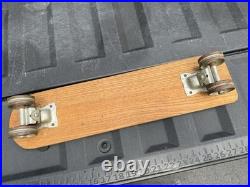
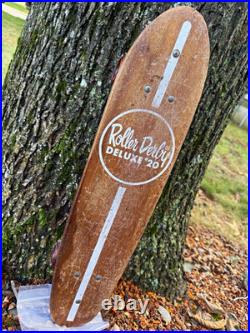
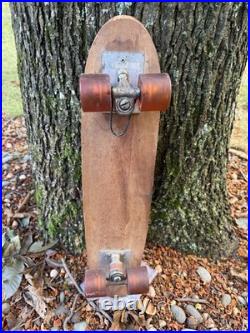
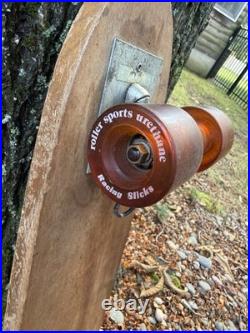
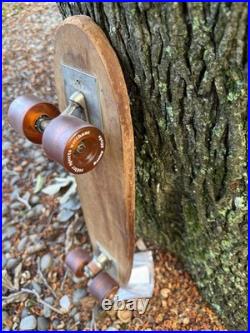
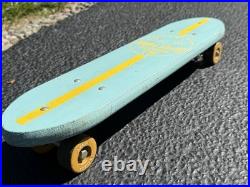
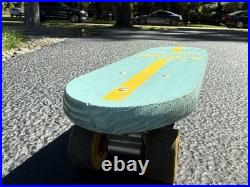
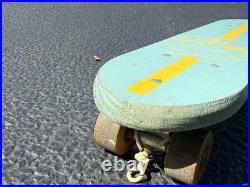
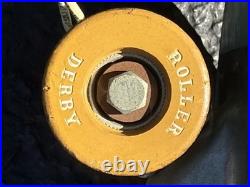
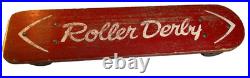
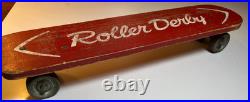
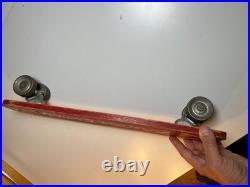
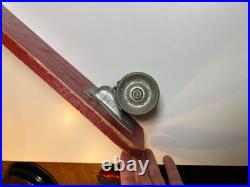
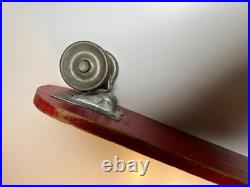
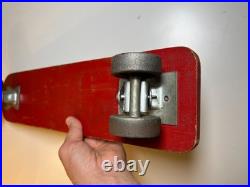
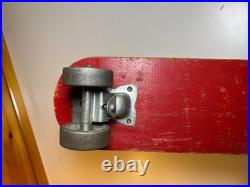
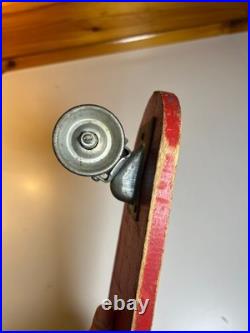
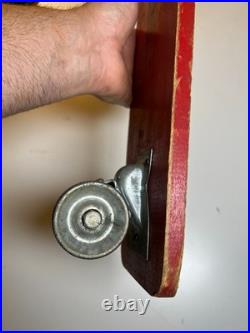
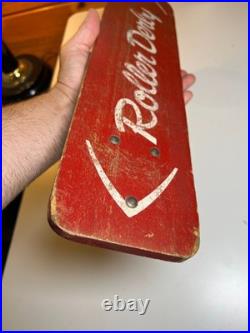
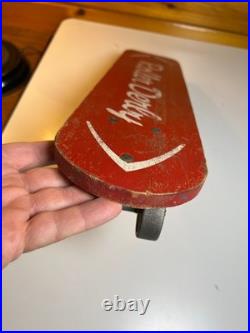
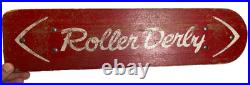
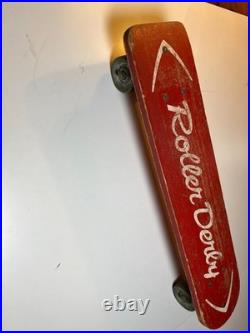
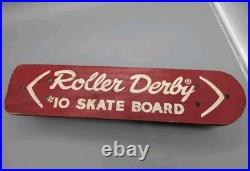
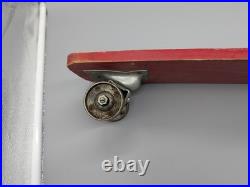
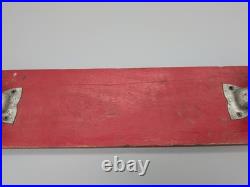
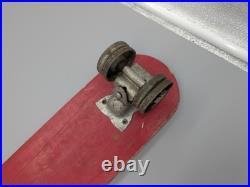
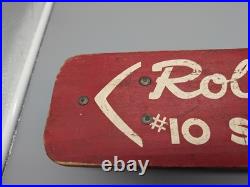
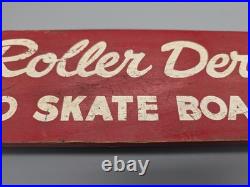
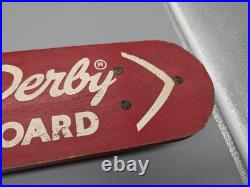
The Vintage Roller Derby 10 Skateboard is a stylish and nostalgic piece perfect for those who appreciate retro skateboarding culture. Made with a durable red wood construction and featuring classic clay wheels, this 19 inch skateboard is ideal for cruising on sidewalks or skater parks. With its United States craftsmanship and Roller Derby branding, this board captures the essence of 70s skateboarding style. Perfect for outdoor sports enthusiasts looking to add a touch of vintage flair to their skateboarding experience.
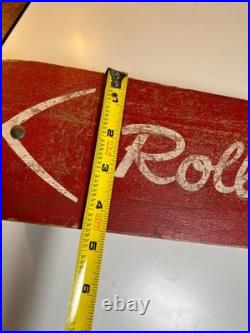
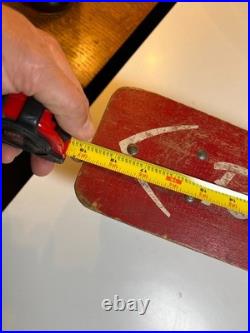
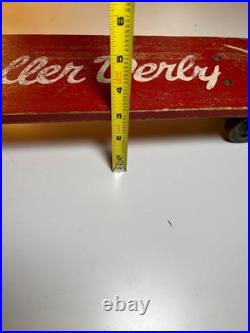
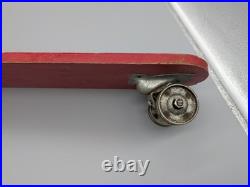
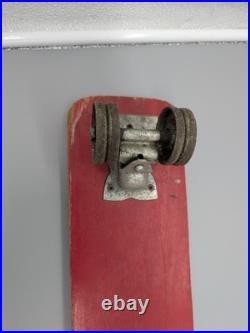
The product is a vintage 1960s red Roller Derby wooden #10 skateboard with metal wheels, measuring 19 inches in length and 4.5 inches in width. This classic skateboard is a collector’s item for fans of retro sports and skateboarding history. With its retro design and durable construction, it would make a unique and nostalgic addition to any collection or a fun choice for a skater looking for a vintage feel.
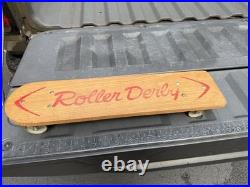
This listing is for one natty with red script 1960′s skateboard. The absolute rarest of all RollerDerby boards. Not to be confused with the abundant Roller Surfer board by Hedland with a nearly identical graphic. This is the precursor to the Roller Derby #10. Grab this one before it’s gone! Other 60′s boards available.
Not the usual #20 Deluxe. This is the elusive Mahogany and white #20. It has a different shape when compared to the status quo natty and red version. I also have some other hard to find boards for sale for your collection/decor, so be sure to check them out.
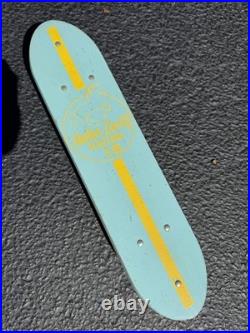
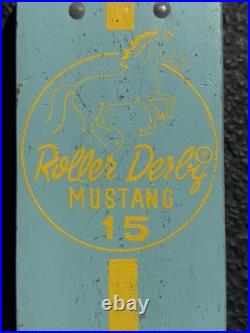
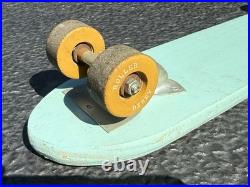
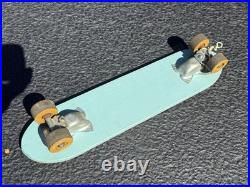
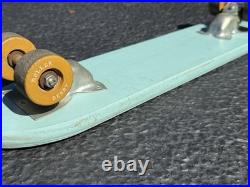
If you’re at all familiar with these old, 60′s, blue Roller Derby Mustangs, then you know they’re usually pretty beat-up. But this one, this one is a rare beauty!!!! Owner told me it was bought, ridden, and then put away for decades all in the same day! The pics tell the story! Don’t miss out-this is the one for your wall! Please take a look at my other vintage skateboards for sale for others rarities.
Estate found, 1977 Vintage Skateboard Derby Game Shamrock Mfg Co Manassas Virginia. Includes` 8 poles 6 flags and 6 wooden blocks, some discoloration stains on the box, otherwise still in very good condition! Please check out all my photos.
One of the very first! A rare, special, piece of Americana! 4.5″ W x 18 7/8″ L. Coined as a way to learn how to surf better…. Just enough use and patina to give her that street creed. Original 1960s Roller Derby sidewalk skateboard, featuring a red-painted wooden deck with white stenciled. Branding, mounted on sturdy steel roller-skate style trucks and wheels. This is a genuine early production model from the dawn of the skateboarding craze. The Roller Derby Skate Company, based in Litchfield, Illinois, was one of the first companies to mass-produce skateboards in the United States. Their Model #10, among others, introduced thousands of kids to skating before polyurethane wheels and modern deck shapes took over in the 1970s. Original wooden deck with beveled edges and red paint. White stencil “Roller Derby” graphics on top. Steel wheels on cast metal trucks. Made in USA – Litchfield, Illinois. However, before skateboards there were scooters, sometimes known as kick scooters and push scooters. Varied forms of scooters have been traced back to the early 1900s, most of them made from wood, metal, or a combination of the two. Scooters had anywhere from two to four wheels. Some of the wheels were metal and others were similar to the wheels on pedal cars. In the 1940s and 1950s, crate scooters made popular sidewalk vehicles. Most crate scooters were handmade. They were relatively inexpensive and simple for kids to construct by using a milk crate or wooden fruit box and metal roller skate wheels attached to a wooden 2 x 4. Eventually kids started removing the boxes and handlebars and just started riding the board with wheels, reminiscent of the famous skateboard scene in the 1985 film. Back to the Future. By the early 1960s, skateboarding started luring participants from the surfer scene. In 1962 a southern California surf shop, Val Surf, began making its own brand of skateboards and struck a deal with Chicago Roller Skate Company for the wheels. The skateboards began to attract everyday surfers who could use the boards when they weren’t in the water, and thus the term “sidewalk surfer” was coined. Additionally, skateboarding gained popularity when Larry Stevenson, publisher of. Promoted it in his monthly magazine. In 1963, Stevenson made the first professional skateboards using the Makaha brand and organized the first known skateboarding contest. That same year saw an evolution in skateboard design with the use of clay (also known as composite) wheels that replaced treacherous metal ones. Moving ahead, in 1964 surf and sailing entrepreneur Hobart “Hobie” Alter joined forces with Vita-Pakt company to make a line of Hobie skateboards; the Hobie line also sponsored several contests and professional skaters. Later that summer, the musical group Jan and Dean performed Sidewalk Surfin. On Dick Clark’s. An event which helped further popularize skateboarding with mainstream society. In 1965, the skateboarding sport peaked as manufacturers tried to keep up with the demand, cranking out an estimated 50 million skateboards between 1963 and 1965. In May, the world’s first skatepark, Surf City in Tucson, Arizona opened to the public..