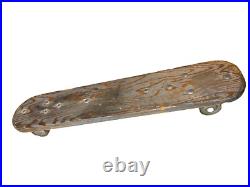
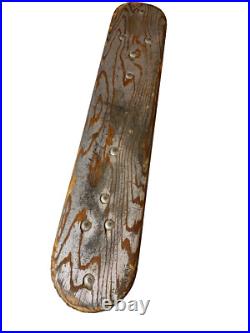
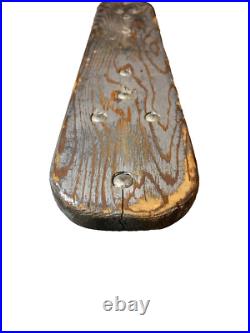
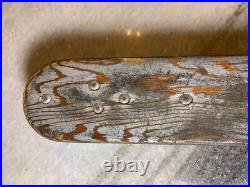
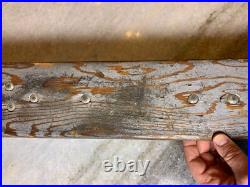
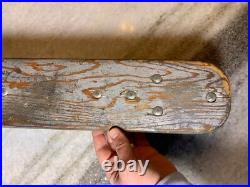
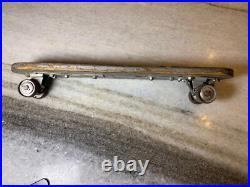
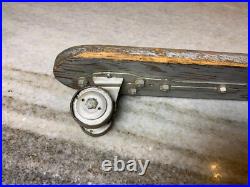
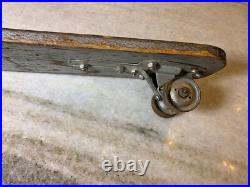
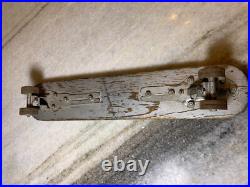
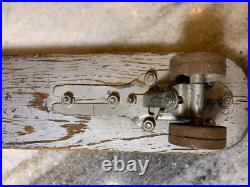
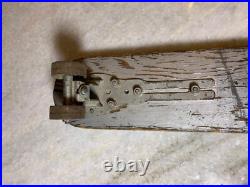
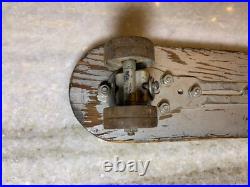
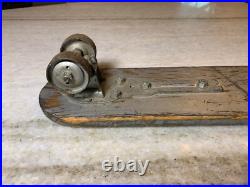
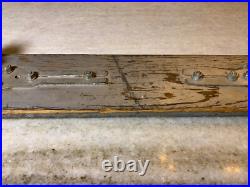
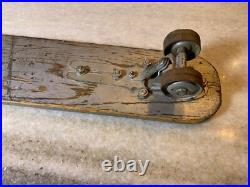
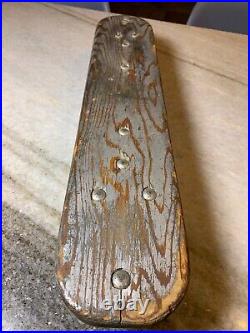
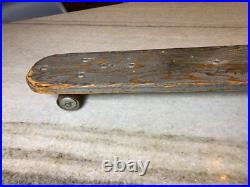
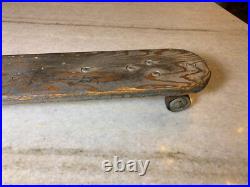
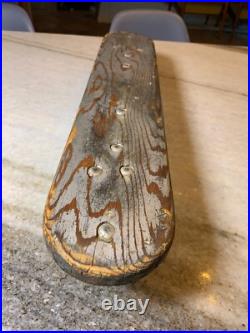
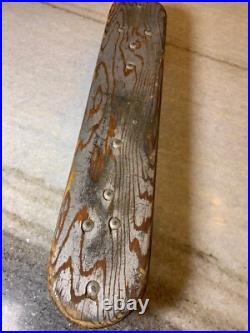
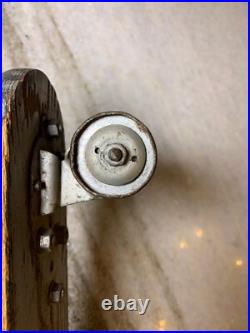
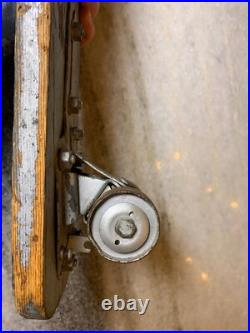
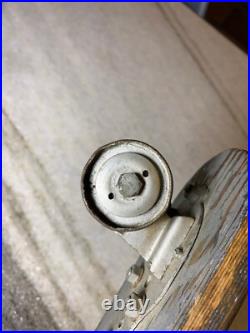
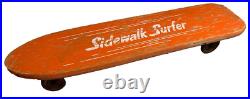
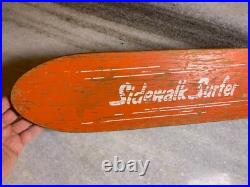
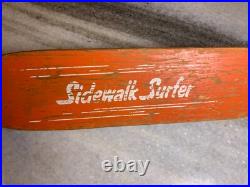
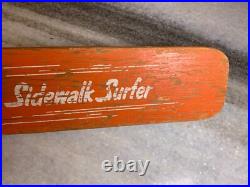
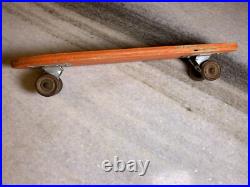
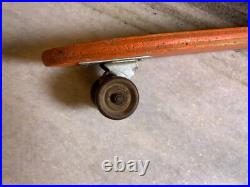
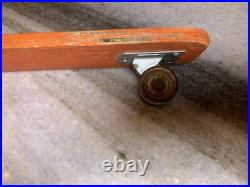
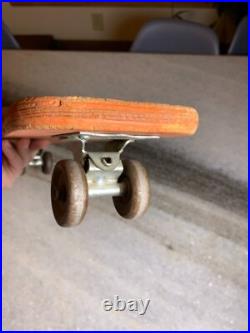
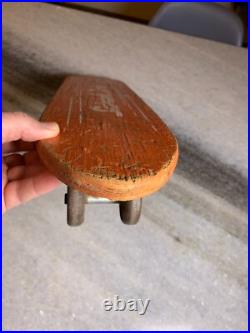
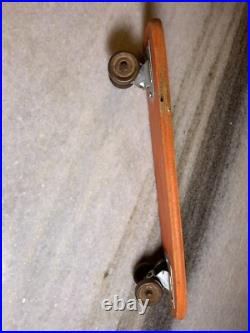
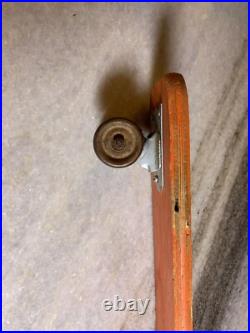
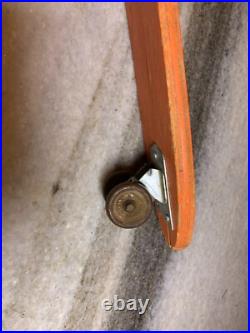
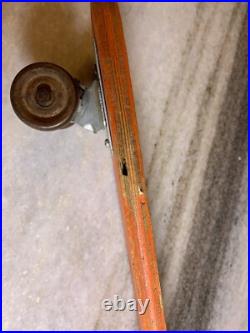
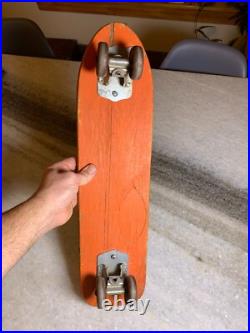
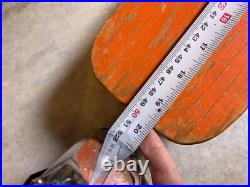
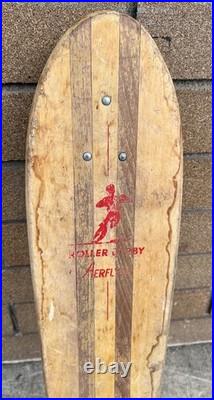
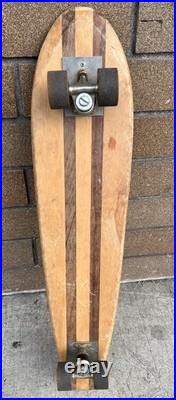
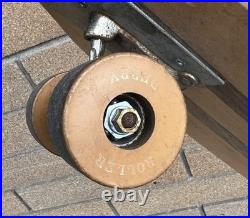
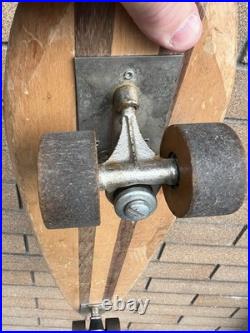
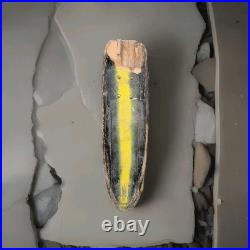
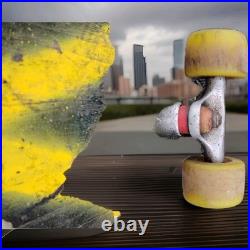
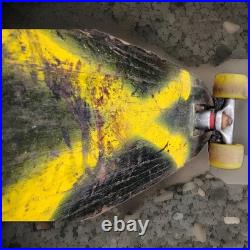
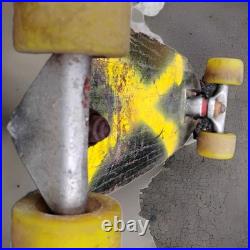
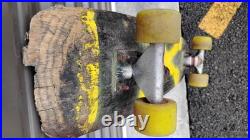
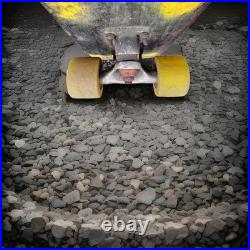
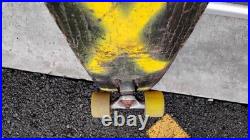
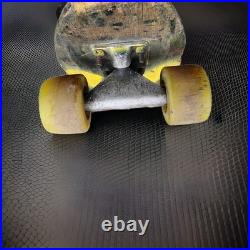
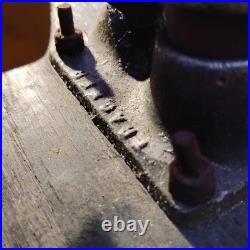
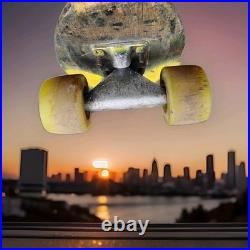
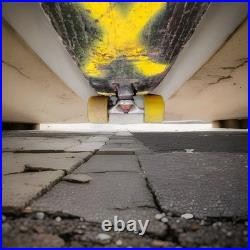
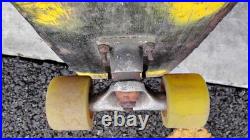
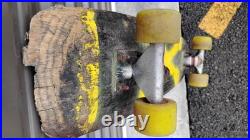
Looks like it may be 1950s.. I love the 50s style chrome paint with woodgrain popping through! I have never seen metal wheels with this same elongated support system underneath (and extra bolts)! Please note the condition of the wheels.. Several are not perfectly round… And attest to the story this board could tell… That massive jump, that double-dog-dare, that friendly push.. 22″ L x 4.25″ W x 3.25 T. However, before skateboards there were scooters, sometimes known as kick scooters and push scooters. Varied forms of scooters have been traced back to the early 1900s, most of them made from wood, metal, or a combination of the two. Scooters had anywhere from two to four wheels. Some of the wheels were metal and others were similar to the wheels on pedal cars. In the 1940s and 1950s, crate scooters made popular sidewalk vehicles. Most crate scooters were handmade. They were relatively inexpensive and simple for kids to construct by using a milk crate or wooden fruit box and metal roller skate wheels attached to a wooden 2 x 4. Eventually kids started removing the boxes and handlebars and just started riding the board with wheels, reminiscent of the famous skateboard scene in the 1985 film. Back to the Future. By the early 1960s, skateboarding started luring participants from the surfer scene. In 1962 a southern California surf shop, Val Surf, began making its own brand of skateboards and struck a deal with Chicago Roller Skate Company for the wheels. The skateboards began to attract everyday surfers who could use the boards when they weren’t in the water, and thus the term “sidewalk surfer” was coined. Additionally, skateboarding gained popularity when Larry Stevenson, publisher of. Promoted it in his monthly magazine. In 1963, Stevenson made the first professional skateboards using the Makaha brand and organized the first known skateboarding contest. That same year saw an evolution in skateboard design with the use of clay (also known as composite) wheels that replaced treacherous metal ones. Moving ahead, in 1964 surf and sailing entrepreneur Hobart “Hobie” Alter joined forces with Vita-Pakt company to make a line of Hobie skateboards; the Hobie line also sponsored several contests and professional skaters. Later that summer, the musical group Jan and Dean performed Sidewalk Surfin. On Dick Clark’s. An event which helped further popularize skateboarding with mainstream society. In 1965, the skateboarding sport peaked as manufacturers tried to keep up with the demand, cranking out an estimated 50 million skateboards between 1963 and 1965. In May, the world’s first skatepark, Surf City in Tucson, Arizona opened to the public.. Skateboard with metal trucks. Old wooden skate deck. Metal wheels for smooth ride. Wooden skateboard with metal wheels. Retro metal wheels skateboard. 60s era skate deck. Vintage skateboard with character. Wooden skateboard with retro charm. Metal wheels for vintage feel. Classic wooden skateboard design. Vintage skateboard for collectors. Antique metal wheels skateboard. Vintage skateboard with history. Wooden deck with metal wheels. Classic skateboard with character. Vintage skateboard from Little Rock, Arkansas.
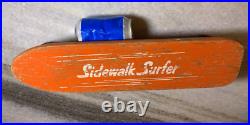
One of the very first! Circa 1950 – somethin. A rare, special, piece of Americana! Small at 19.75″ Long x 5″ W (see size relative to soda can in the pics). Coined as a way to learn how to surf better…. Or in this case Sidewalk Surfing. Just enough use and patina to give her that street creed. However, before skateboards there were scooters, sometimes known as kick scooters and push scooters. Varied forms of scooters have been traced back to the early 1900s, most of them made from wood, metal, or a combination of the two. Scooters had anywhere from two to four wheels. Some of the wheels were metal and others were similar to the wheels on pedal cars. In the 1940s and 1950s, crate scooters made popular sidewalk vehicles. Most crate scooters were handmade. They were relatively inexpensive and simple for kids to construct by using a milk crate or wooden fruit box and metal roller skate wheels attached to a wooden 2 x 4. Eventually kids started removing the boxes and handlebars and just started riding the board with wheels, reminiscent of the famous skateboard scene in the 1985 film. Back to the Future. By the early 1960s, skateboarding started luring participants from the surfer scene. In 1962 a southern California surf shop, Val Surf, began making its own brand of skateboards and struck a deal with Chicago Roller Skate Company for the wheels. The skateboards began to attract everyday surfers who could use the boards when they weren’t in the water, and thus the term “sidewalk surfer” was coined. Additionally, skateboarding gained popularity when Larry Stevenson, publisher of. Promoted it in his monthly magazine. In 1963, Stevenson made the first professional skateboards using the Makaha brand and organized the first known skateboarding contest. That same year saw an evolution in skateboard design with the use of clay (also known as composite) wheels that replaced treacherous metal ones. Moving ahead, in 1964 surf and sailing entrepreneur Hobart “Hobie” Alter joined forces with Vita-Pakt company to make a line of Hobie skateboards; the Hobie line also sponsored several contests and professional skaters. Later that summer, the musical group Jan and Dean performed Sidewalk Surfin. On Dick Clark’s. An event which helped further popularize skateboarding with mainstream society. In 1965, the skateboarding sport peaked as manufacturers tried to keep up with the demand, cranking out an estimated 50 million skateboards between 1963 and 1965. In May, the world’s first skatepark, Surf City in Tucson, Arizona opened to the public..
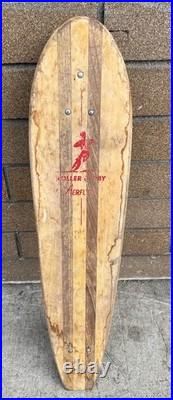
The wood shows some wear and a little water damage. A good wood conditioner will bring it right back to life. The product is a vintage 60′s Aerflyte Roller Derby skateboard with a wool inlay clay wheel. It is 30 long and is an early model from the celebrated Roller Derby brand. This classic skateboard is a must-have for collectors and enthusiasts of vintage outdoor sports equipment, offering a unique and nostalgic piece of skateboarding history.
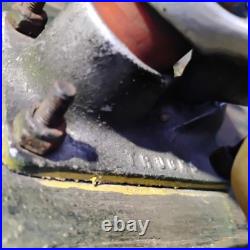
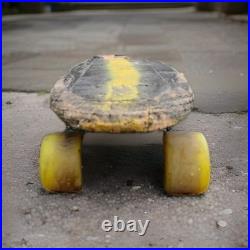
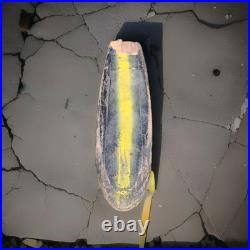
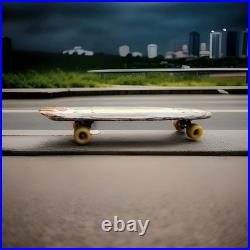
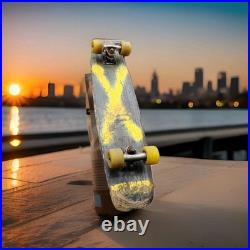
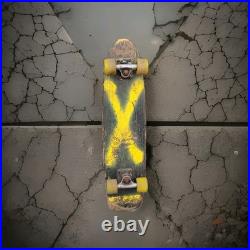
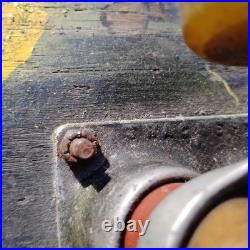
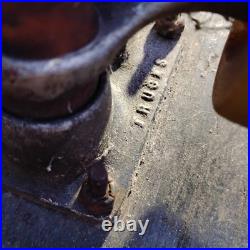
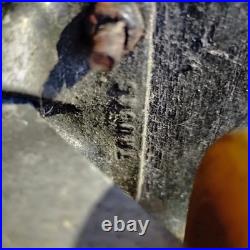
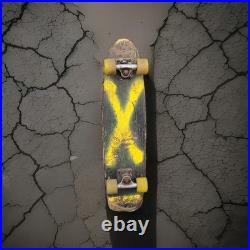
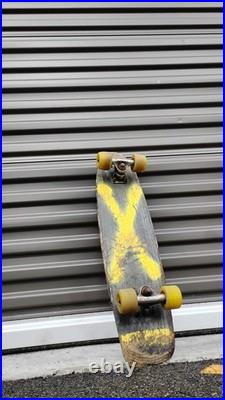
PREMIUM COLLECTOR LISTING – EARLY 1970s SKATEBOARD ORIGINAL TRUCK CO. HARDWARE TITLE OPTIONS (choose the one that fits your platform). Early 1970s Vintage Skateboard. Original TRUCK CO. Cast Trucks. First-Gen Urethane Wheels. Rare 70s Skateboard – TRUCK CO. Stamped Trucks. Yellow Urethane Wheels. Complete Setup. Antique Skateboard. 1968-74 Era. Cast Metal TRUCK CO. Hardware. Collectible Original — DESCRIPTION (Premium Collector Version) A rare surviving early-1970s complete skateboard, featuring original cast-metal TRUCK CO. Stamped trucks, first-generation yellow urethane wheels, and a solid-wood deck with decades of authentic patina. This is the real deal – an untouched, early-production skateboard from the era right after the urethane revolution changed the sport. The deck is hand-painted in a unique vintage black + neon yellow racing stripe pattern, giving it a bold retro look. Why Collectors Want This Board? Original TRUCK CO. — Perfect For. Skateboard history collectors. 60s-70s sports memorabilia displays. Surf/skate themed décor. Museum-style wall mounting. Photo/film props. Restoration hobbyists.
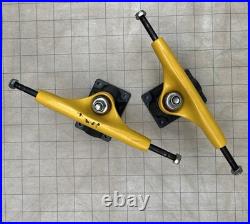
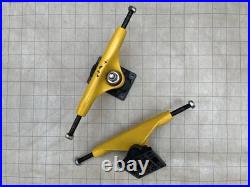
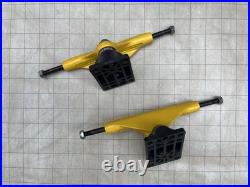
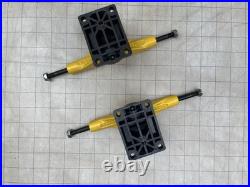
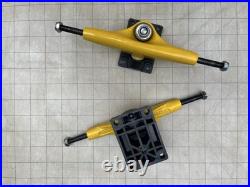
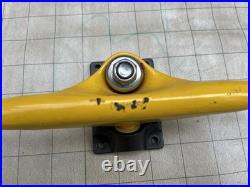
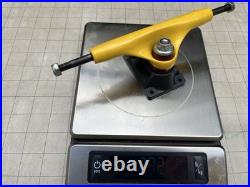
NOS vintage early 80′s Tracker Trucks Full- tracks with large pivot and 1st gen Ultra light baseplates (Pivot bushings are more recent version). Perfect trucks for that old school build or to fill in your collection. Thanks for looking and have a great day!
Very Rare and short lived Canadian skateboard company from the late 80′s / early 90′s they even signed that psychopath Gator! In great condition, seems like it was only ridden a few times and tucked away in storage all these years, no water damage. Please see photos for condition, awesome hot pink grip tape job, such a great shape too.
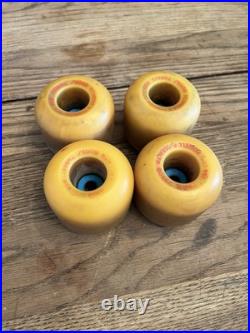
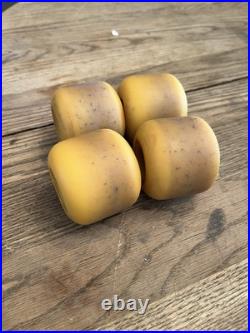
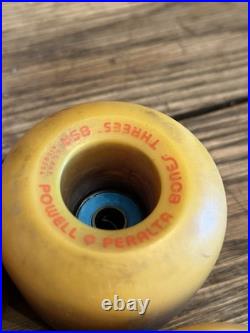
NOS Vintage Speed Vent Loose Ball wheels. These were used by SIMS before they started making their own wheels. They are in fantastic shape, and they have never been ridden. Loose ball design for that way early vintage sound and feel. Don’t let loose ball wheels fool you. When the tension on the cone nuts is right they are as fast as sealed bearings, maybe faster. But you have to keep them clean. Whether you’re a collector or just looking for a cool ride, this skateboard is sure to impress. Its unique design and vintage feel make it a standout piece that’s sure to turn heads. Grab this skateboard today and experience the thrill of the ride!