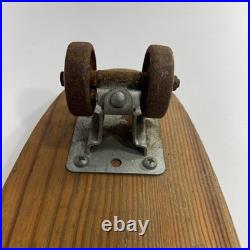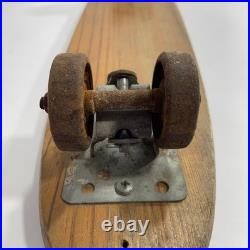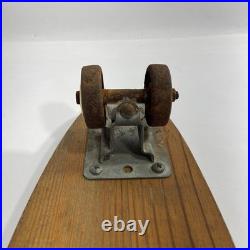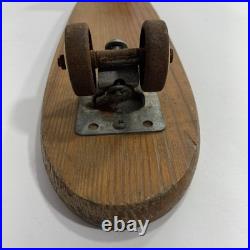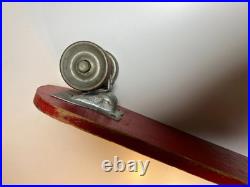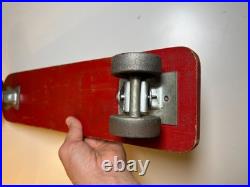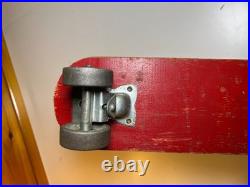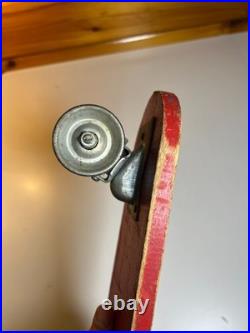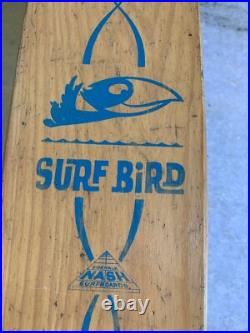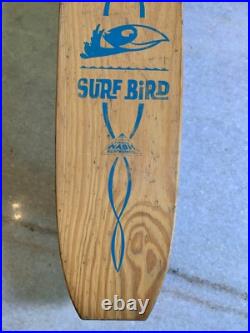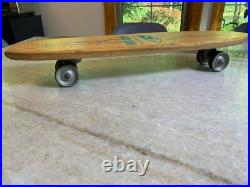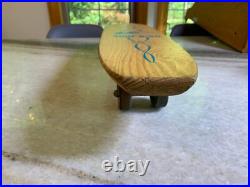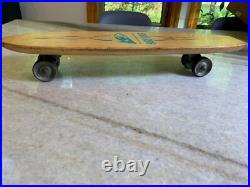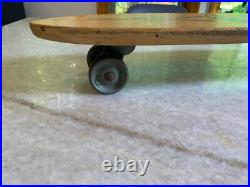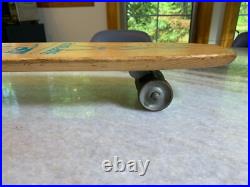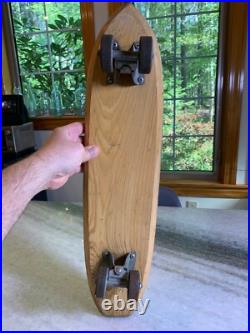
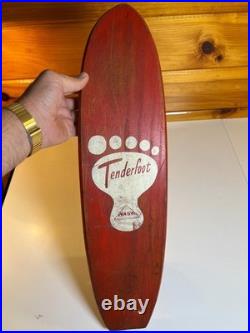
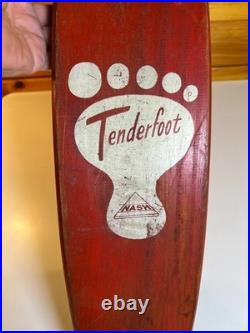
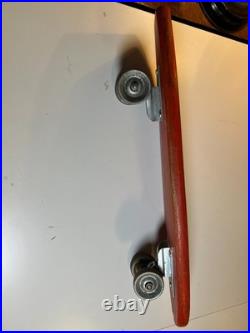
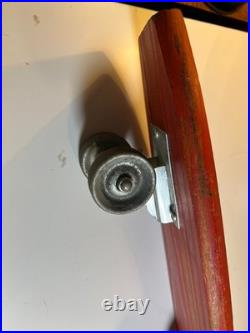
Vintage Tenderfoot Sidewalk Surf Wooden Skateboard Metal Wheels Fort Worth TEXAS

Vintage Tenderfoot Sidewalk Surf Wooden Skateboard Metal Wheels Fort Worth TEXAS

Vintage Tenderfoot Sidewalk Surf Wooden Skateboard Metal Wheels Fort Worth TEXAS

Vintage Tenderfoot Sidewalk Surf Wooden Skateboard Metal Wheels Fort Worth TEXAS

Vintage Tenderfoot Sidewalk Surf Wooden Skateboard Metal Wheels Fort Worth TEXAS

Vintage Tenderfoot Sidewalk Surf Wooden Skateboard Metal Wheels Fort Worth TEXAS

Vintage Tenderfoot Sidewalk Surf Wooden Skateboard Metal Wheels Fort Worth TEXAS

Vintage Tenderfoot Sidewalk Surf Wooden Skateboard Metal Wheels Fort Worth TEXAS

Vintage Tenderfoot Sidewalk Surf Wooden Skateboard Metal Wheels Fort Worth TEXAS

Vintage Tenderfoot Sidewalk Surf Wooden Skateboard Metal Wheels Fort Worth TEXAS

Vintage Tenderfoot Sidewalk Surf Wooden Skateboard Metal Wheels Fort Worth TEXAS

Vintage Tenderfoot Sidewalk Surf Wooden Skateboard Metal Wheels Fort Worth TEXAS

Vintage Tenderfoot Sidewalk Surf Wooden Skateboard Metal Wheels Fort Worth TEXAS

Vintage Tenderfoot Sidewalk Surf Wooden Skateboard Metal Wheels Fort Worth TEXAS

Vintage Tenderfoot Sidewalk Surf Wooden Skateboard Metal Wheels Fort Worth TEXAS

Vintage Tenderfoot Sidewalk Surf Wooden Skateboard Metal Wheels Fort Worth TEXAS

Vintage Tenderfoot Sidewalk Surf Wooden Skateboard Metal Wheels Fort Worth TEXAS

Vintage Tenderfoot Sidewalk Surf Wooden Skateboard Metal Wheels Fort Worth TEXAS

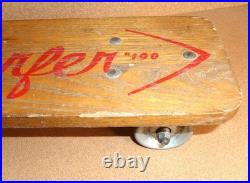
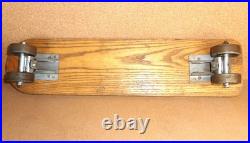
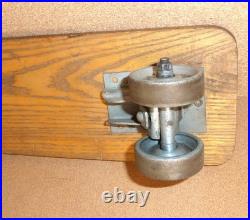
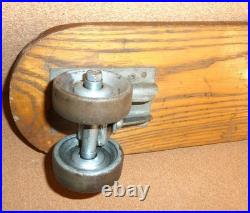
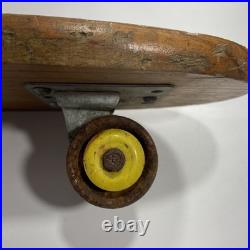
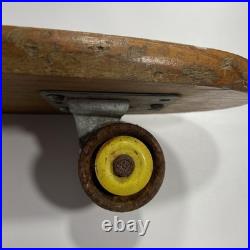
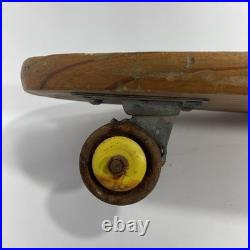
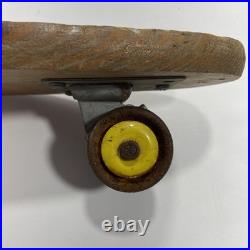
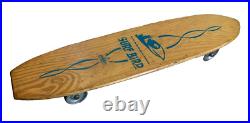
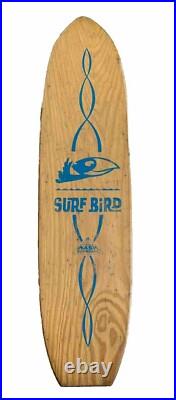
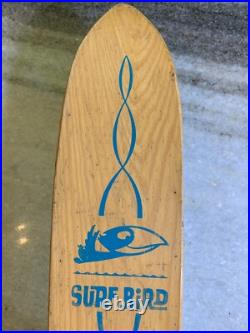
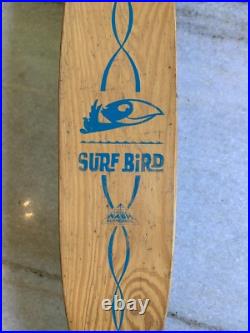
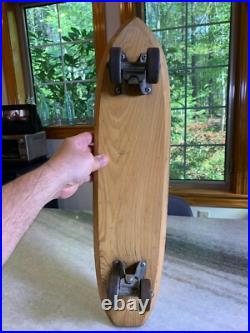
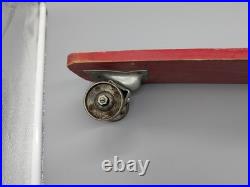
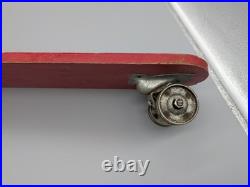
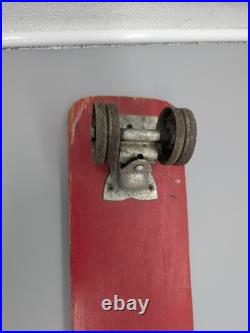
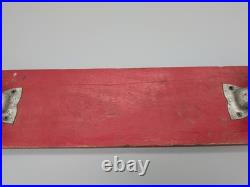
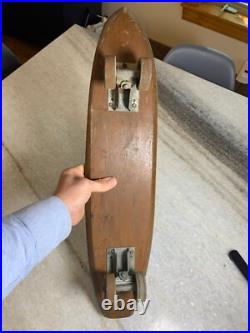
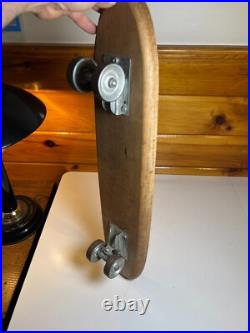
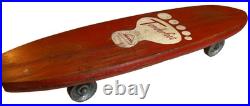
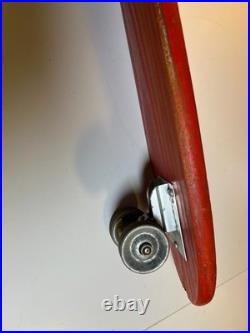
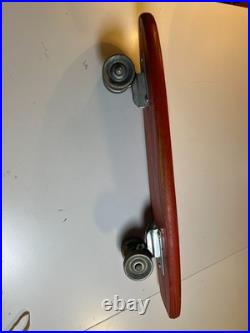
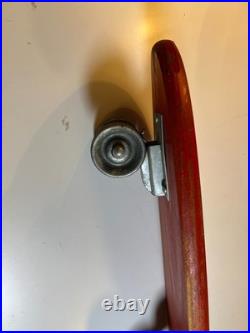
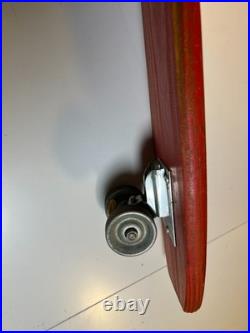
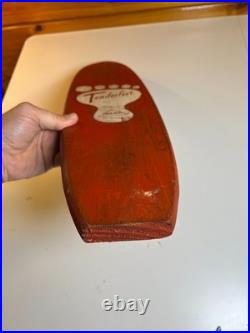
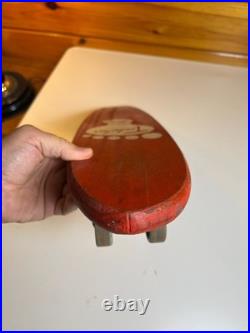
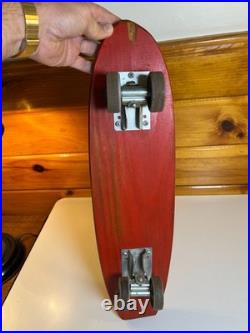
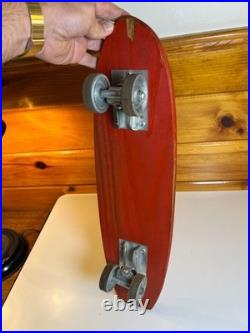
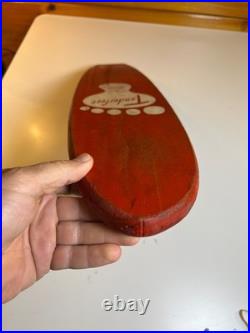
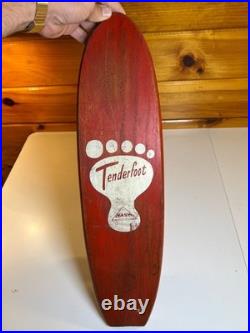
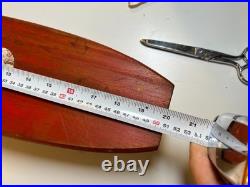
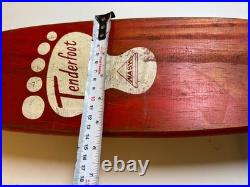
Just a enough patina and use to hint at its past life, but a beauty to display. Its of the era whereby these first wooden boards with metal wheels were meant to teach you how to surf by what was assumed to be easier… Tenderfoot was a model of wooden sidewalk skateboard-often called a “sidewalk surfer”-manufactured by Nash Skateboards in the 1960s. These boards featured metal wheels and a wooden deck, long before the advent of urethane wheels and grip tape. They were known for being both rugged and risky to ride! Crafted of solid wood with metal wheels-early models lacked the smoother ride of later polyurethane versions. Decks often bore bright paint and a distinctive “Tenderfoot” logo. Nash was one of the first companies to mass-produce skateboards, helping shape skate culture. Full Name: Nash Manufacturing Company. Founded: 1918, in Fort Worth, Texas. Original Focus: Sporting goods, fishing tackle, and toys. Nash quickly became known for affordable, mass-produced recreational gear aimed at department stores and catalog sales. Nash & Early Skateboarding. By the mid-1960s, skateboarding was emerging as a national craze. Decks: Solid hardwood or plywood, sometimes painted in bright colors with decals or silk-screened logos. Wheels: Early models used steel or clay composite wheels (fast but rough), later moving to improved clay and eventually urethane in the 1970s. Trucks: Stamped steel assemblies, not the cast aluminum trucks we see today. Tenderfoot (entry-level board for younger riders). The Tenderfoot was smaller and simpler than higher-end models, marketed as a starter board. Nash skateboards were built to a price point, not high-end performance. Ads often showed smiling kids in Keds sneakers riding in driveways – safety gear was virtually nonexistent in marketing. Why Nash Matters in Skate History. Accessibility: For many kids in the 1960s, Nash boards were their first skateboard because they were cheap and widely available. Cultural Footprint: Nash boards introduced countless riders to the sport, even if they quickly upgraded to higher-performance brands. Survivors: While many were ridden hard and discarded, surviving examples (especially with original decals, wheels, and hardware) are collectible for their retro graphics and nostalgia factor. Beyond skateboards, Nash made. Fishing rods and tackle. Badminton and tennis sets. Other seasonal sporting goods. However, before skateboards there were scooters, sometimes known as kick scooters and push scooters. Varied forms of scooters have been traced back to the early 1900s, most of them made from wood, metal, or a combination of the two. Scooters had anywhere from two to four wheels. Some of the wheels were metal and others were similar to the wheels on pedal cars. In the 1940s and 1950s, crate scooters made popular sidewalk vehicles. Most crate scooters were handmade. They were relatively inexpensive and simple for kids to construct by using a milk crate or wooden fruit box and metal roller skate wheels attached to a wooden 2 x 4. Eventually kids started removing the boxes and handlebars and just started riding the board with wheels, reminiscent of the famous skateboard scene in the 1985 film. Back to the Future. By the early 1960s, skateboarding started luring participants from the surfer scene. In 1962 a southern California surf shop, Val Surf, began making its own brand of skateboards and struck a deal with Chicago Roller Skate Company for the wheels. The skateboards began to attract everyday surfers who could use the boards when they weren’t in the water, and thus the term “sidewalk surfer” was coined. Additionally, skateboarding gained popularity when Larry Stevenson, publisher of. Promoted it in his monthly magazine. In 1963, Stevenson made the first professional skateboards using the Makaha brand and organized the first known skateboarding contest. That same year saw an evolution in skateboard design with the use of clay (also known as composite) wheels that replaced treacherous metal ones. Moving ahead, in 1964 surf and sailing entrepreneur Hobart “Hobie” Alter joined forces with Vita-Pakt company to make a line of Hobie skateboards; the Hobie line also sponsored several contests and professional skaters. Later that summer, the musical group Jan and Dean performed Sidewalk Surfin. On Dick Clark’s. An event which helped further popularize skateboarding with mainstream society. In 1965, the skateboarding sport peaked as manufacturers tried to keep up with the demand, cranking out an estimated 50 million skateboards between 1963 and 1965. In May, the world’s first skatepark, Surf City in Tucson, Arizona opened to the public.. Skateboard with metal trucks. Old wooden skate deck. Metal wheels for smooth ride. Wooden skateboard with metal wheels. Retro metal wheels skateboard. 60s era skate deck. Vintage skateboard with character. Wooden skateboard with retro charm. Metal wheels for vintage feel. Classic wooden skateboard design. Vintage skateboard for collectors. Antique metal wheels skateboard. Vintage skateboard with history. Wooden deck with metal wheels. Classic skateboard with character. Vintage skateboard from Little Rock, Arkansas.
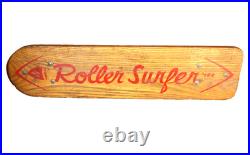
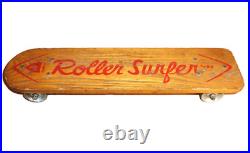
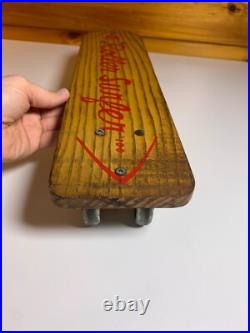
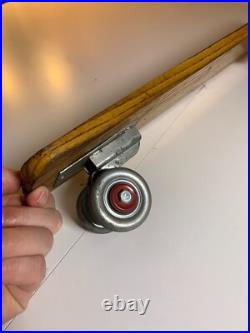
Vintage ROLLER SURFER Metal Steel Wheels Skateboard Wood Wooden Nokomis Illinois

Vintage ROLLER SURFER Metal Steel Wheels Skateboard Wood Wooden Nokomis Illinois

Vintage ROLLER SURFER Metal Steel Wheels Skateboard Wood Wooden Nokomis Illinois

Vintage ROLLER SURFER Metal Steel Wheels Skateboard Wood Wooden Nokomis Illinois

Vintage ROLLER SURFER Metal Steel Wheels Skateboard Wood Wooden Nokomis Illinois

Vintage ROLLER SURFER Metal Steel Wheels Skateboard Wood Wooden Nokomis Illinois

Vintage ROLLER SURFER Metal Steel Wheels Skateboard Wood Wooden Nokomis Illinois

Vintage ROLLER SURFER Metal Steel Wheels Skateboard Wood Wooden Nokomis Illinois

Vintage ROLLER SURFER Metal Steel Wheels Skateboard Wood Wooden Nokomis Illinois

Vintage ROLLER SURFER Metal Steel Wheels Skateboard Wood Wooden Nokomis Illinois

Vintage ROLLER SURFER Metal Steel Wheels Skateboard Wood Wooden Nokomis Illinois

Vintage ROLLER SURFER Metal Steel Wheels Skateboard Wood Wooden Nokomis Illinois

Vintage ROLLER SURFER Metal Steel Wheels Skateboard Wood Wooden Nokomis Illinois

Vintage ROLLER SURFER Metal Steel Wheels Skateboard Wood Wooden Nokomis Illinois

Vintage ROLLER SURFER Metal Steel Wheels Skateboard Wood Wooden Nokomis Illinois

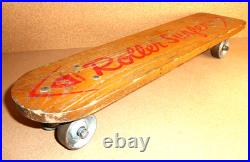
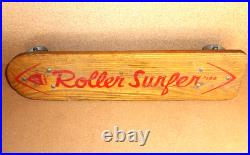
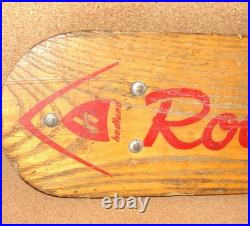
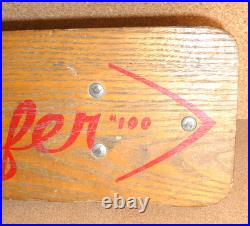
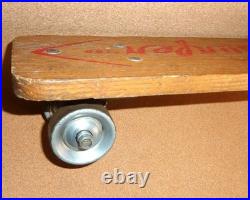
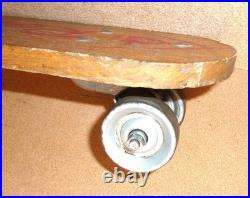
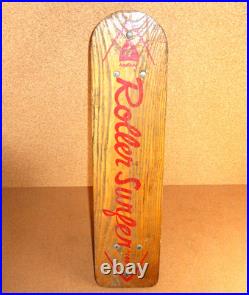
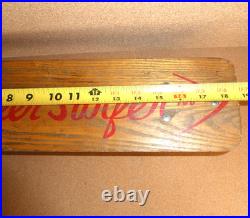
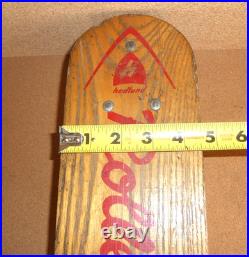
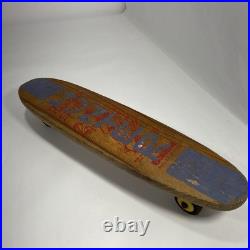
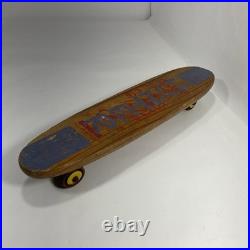
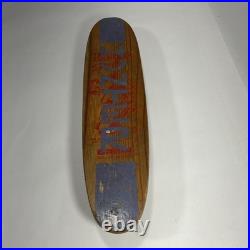
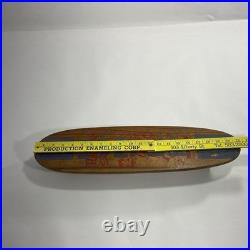
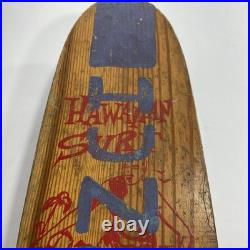
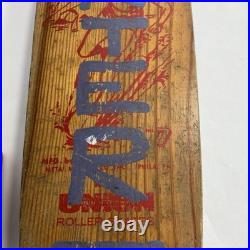
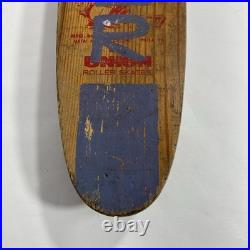
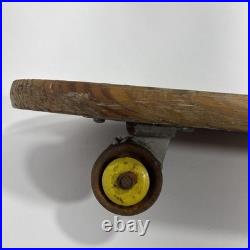
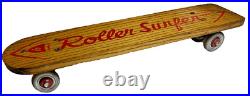
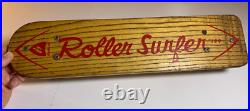
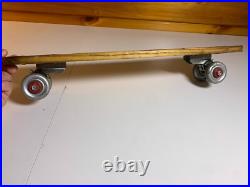
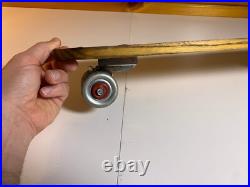
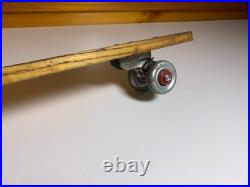
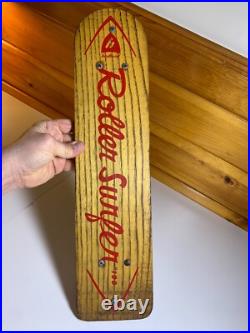
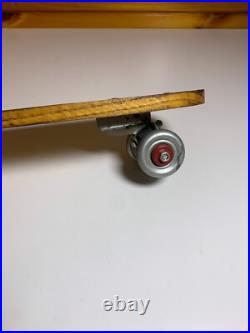
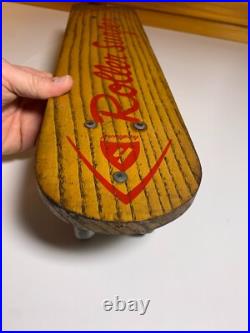
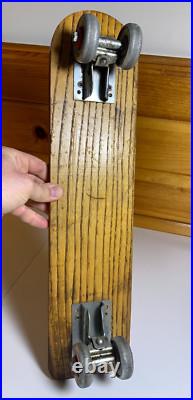
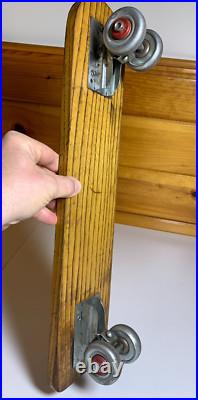
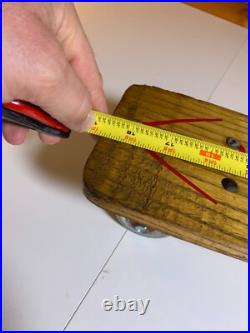
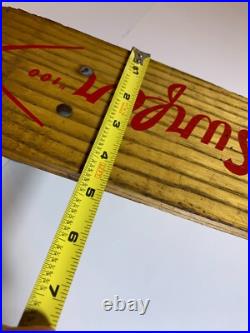
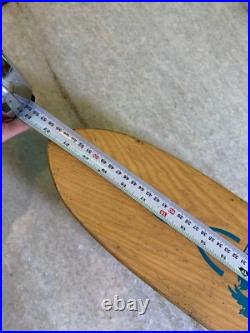
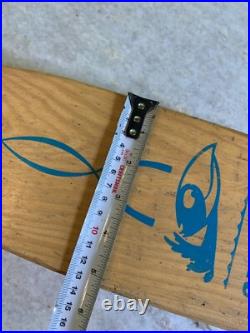
One of the very first! Circa 1960 – somethin. A rare, special, piece of Americana! Small at 18.75″ Long x 4.75″ W. Coined as a way to learn how to surf better…. Or in this case Sidewalk Surfing. Just enough use and patina to give her that street creed. Hedlund Skateboards were produced by the Hedlund Manufacturing Company, founded in 1949 by Swan Hedlund in Nokomis, Illinois. Initially specializing in snow skis, the company expanded into skateboard production during the 1960s, a period when skateboarding was gaining popularity in the United States. One of their notable skateboard lines was the “Roller Surfer” series, which included models such as the #100, #200, and #500. The Roller Surfer #100, for instance, measured 4.4 inches in width and 18.9 inches in length. The #500 models featured variations in design, including differences in tail shape and truck mounting configurations. Some of these boards bore graphics depicting a skier silhouette beneath the Hedlund logo, reflecting the company’s roots in ski manufacturing. However, before skateboards there were scooters, sometimes known as kick scooters and push scooters. Varied forms of scooters have been traced back to the early 1900s, most of them made from wood, metal, or a combination of the two. Scooters had anywhere from two to four wheels. Some of the wheels were metal and others were similar to the wheels on pedal cars. In the 1940s and 1950s, crate scooters made popular sidewalk vehicles. Most crate scooters were handmade. They were relatively inexpensive and simple for kids to construct by using a milk crate or wooden fruit box and metal roller skate wheels attached to a wooden 2 x 4. Eventually kids started removing the boxes and handlebars and just started riding the board with wheels, reminiscent of the famous skateboard scene in the 1985 film. Back to the Future. By the early 1960s, skateboarding started luring participants from the surfer scene. In 1962 a southern California surf shop, Val Surf, began making its own brand of skateboards and struck a deal with Chicago Roller Skate Company for the wheels. The skateboards began to attract everyday surfers who could use the boards when they weren’t in the water, and thus the term “sidewalk surfer” was coined. Additionally, skateboarding gained popularity when Larry Stevenson, publisher of. Promoted it in his monthly magazine. In 1963, Stevenson made the first professional skateboards using the Makaha brand and organized the first known skateboarding contest. That same year saw an evolution in skateboard design with the use of clay (also known as composite) wheels that replaced treacherous metal ones. Moving ahead, in 1964 surf and sailing entrepreneur Hobart “Hobie” Alter joined forces with Vita-Pakt company to make a line of Hobie skateboards; the Hobie line also sponsored several contests and professional skaters. Later that summer, the musical group Jan and Dean performed Sidewalk Surfin. On Dick Clark’s. An event which helped further popularize skateboarding with mainstream society. In 1965, the skateboarding sport peaked as manufacturers tried to keep up with the demand, cranking out an estimated 50 million skateboards between 1963 and 1965. In May, the world’s first skatepark, Surf City in Tucson, Arizona opened to the public..
Vintage Skateboard Emerica Shoes Metal GO SKATEBOARDING Sign RARE Dealer Promo

Vintage Skateboard Emerica Shoes Metal GO SKATEBOARDING Sign RARE Dealer Promo

Vintage Skateboard Emerica Shoes Metal GO SKATEBOARDING Sign RARE Dealer Promo

Vintage Skateboard Emerica Shoes Metal GO SKATEBOARDING Sign RARE Dealer Promo

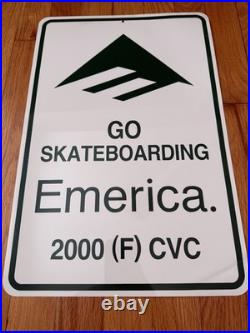
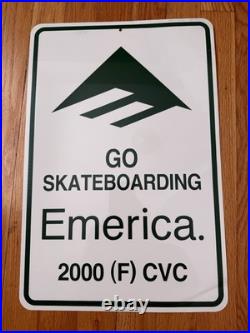
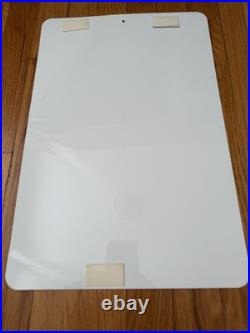
This was an Emerica Dealer Only promotional metal sign, distributed to promote Go Skateboarding Day. Own a piece of extremely RARE Skateboarding memorabilia with this ORIGINAL, hard to find, 18×12 nostalgic metal sign! The sign is Like New, stored in a box for 26yrs condition and was never hung up. It has a couple small creases that can be easily removed to perfect original condition.

Roller Derby Surf Board Vintage Steel Metal Wheels Skateboard Wood Illinois

Roller Derby Surf Board Vintage Steel Metal Wheels Skateboard Wood Illinois

Roller Derby Surf Board Vintage Steel Metal Wheels Skateboard Wood Illinois

Roller Derby Surf Board Vintage Steel Metal Wheels Skateboard Wood Illinois

Roller Derby Surf Board Vintage Steel Metal Wheels Skateboard Wood Illinois

Roller Derby Surf Board Vintage Steel Metal Wheels Skateboard Wood Illinois

Roller Derby Surf Board Vintage Steel Metal Wheels Skateboard Wood Illinois

Roller Derby Surf Board Vintage Steel Metal Wheels Skateboard Wood Illinois

Roller Derby Surf Board Vintage Steel Metal Wheels Skateboard Wood Illinois

Roller Derby Surf Board Vintage Steel Metal Wheels Skateboard Wood Illinois

Roller Derby Surf Board Vintage Steel Metal Wheels Skateboard Wood Illinois

Roller Derby Surf Board Vintage Steel Metal Wheels Skateboard Wood Illinois

Roller Derby Surf Board Vintage Steel Metal Wheels Skateboard Wood Illinois

Roller Derby Surf Board Vintage Steel Metal Wheels Skateboard Wood Illinois

Roller Derby Surf Board Vintage Steel Metal Wheels Skateboard Wood Illinois

Roller Derby Surf Board Vintage Steel Metal Wheels Skateboard Wood Illinois

Roller Derby Surf Board Vintage Steel Metal Wheels Skateboard Wood Illinois

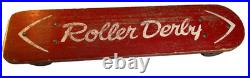
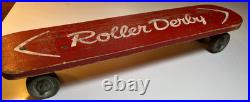
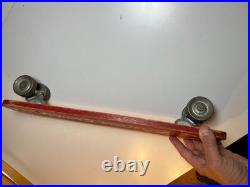
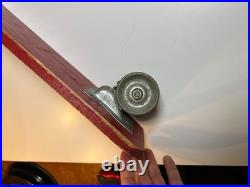
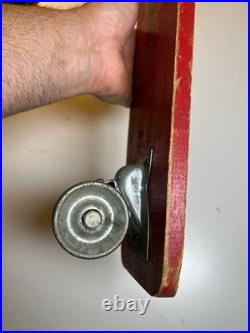
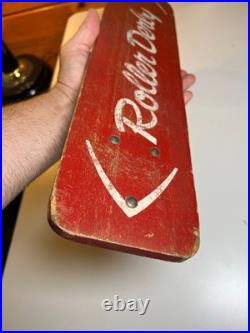
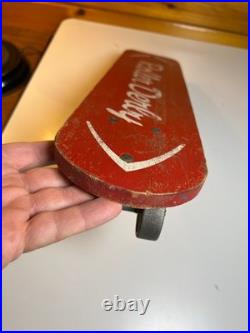
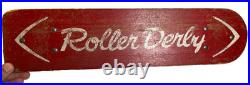
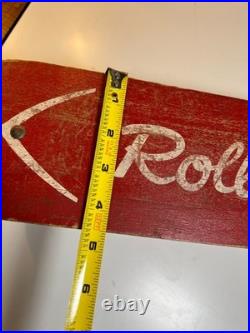
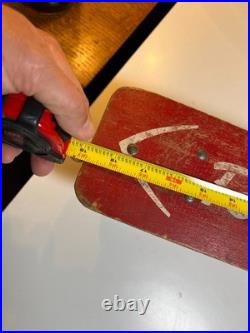
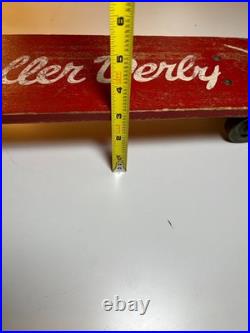
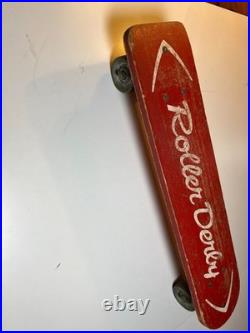
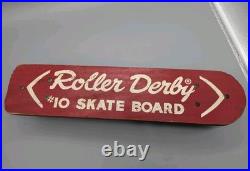
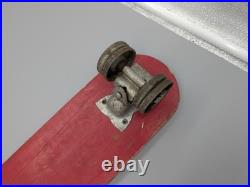
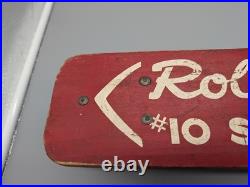
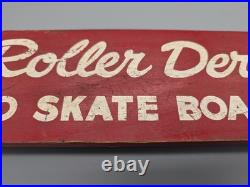
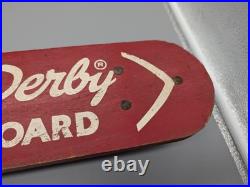
One of the very first! A rare, special, piece of Americana! 4.5″ W x 18 7/8″ L. Coined as a way to learn how to surf better…. Just enough use and patina to give her that street creed. Original 1960s Roller Derby sidewalk skateboard, featuring a red-painted wooden deck with white stenciled. Branding, mounted on sturdy steel roller-skate style trucks and wheels. This is a genuine early production model from the dawn of the skateboarding craze. The Roller Derby Skate Company, based in Litchfield, Illinois, was one of the first companies to mass-produce skateboards in the United States. Their Model #10, among others, introduced thousands of kids to skating before polyurethane wheels and modern deck shapes took over in the 1970s. Original wooden deck with beveled edges and red paint. White stencil “Roller Derby” graphics on top. Steel wheels on cast metal trucks. Made in USA – Litchfield, Illinois. However, before skateboards there were scooters, sometimes known as kick scooters and push scooters. Varied forms of scooters have been traced back to the early 1900s, most of them made from wood, metal, or a combination of the two. Scooters had anywhere from two to four wheels. Some of the wheels were metal and others were similar to the wheels on pedal cars. In the 1940s and 1950s, crate scooters made popular sidewalk vehicles. Most crate scooters were handmade. They were relatively inexpensive and simple for kids to construct by using a milk crate or wooden fruit box and metal roller skate wheels attached to a wooden 2 x 4. Eventually kids started removing the boxes and handlebars and just started riding the board with wheels, reminiscent of the famous skateboard scene in the 1985 film. Back to the Future. By the early 1960s, skateboarding started luring participants from the surfer scene. In 1962 a southern California surf shop, Val Surf, began making its own brand of skateboards and struck a deal with Chicago Roller Skate Company for the wheels. The skateboards began to attract everyday surfers who could use the boards when they weren’t in the water, and thus the term “sidewalk surfer” was coined. Additionally, skateboarding gained popularity when Larry Stevenson, publisher of. Promoted it in his monthly magazine. In 1963, Stevenson made the first professional skateboards using the Makaha brand and organized the first known skateboarding contest. That same year saw an evolution in skateboard design with the use of clay (also known as composite) wheels that replaced treacherous metal ones. Moving ahead, in 1964 surf and sailing entrepreneur Hobart “Hobie” Alter joined forces with Vita-Pakt company to make a line of Hobie skateboards; the Hobie line also sponsored several contests and professional skaters. Later that summer, the musical group Jan and Dean performed Sidewalk Surfin. On Dick Clark’s. An event which helped further popularize skateboarding with mainstream society. In 1965, the skateboarding sport peaked as manufacturers tried to keep up with the demand, cranking out an estimated 50 million skateboards between 1963 and 1965. In May, the world’s first skatepark, Surf City in Tucson, Arizona opened to the public..

RARE Independent Skateboard 90′s Metal Tin Sign Beer Bar Mancave

RARE Independent Skateboard 90's Metal Tin Sign Beer Bar Mancave

RARE Independent Skateboard 90's Metal Tin Sign Beer Bar Mancave

RARE Independent Skateboard 90's Metal Tin Sign Beer Bar Mancave

RARE Independent Skateboard 90's Metal Tin Sign Beer Bar Mancave

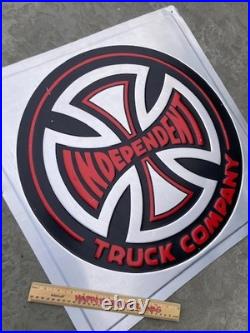
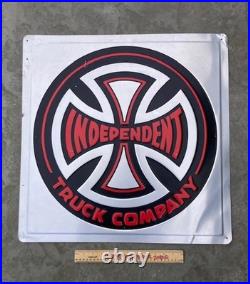
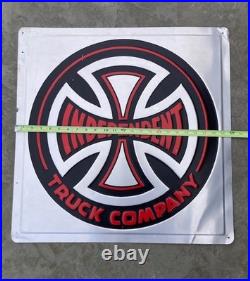
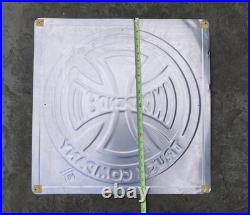
This item is an Authentic RARE Independent Skateboard 90′s Metal. Beer Tin Tacker Sign. This tin sign is in Used, some wear. See Photos for Exact Details, Condition, and Size. We post many photos of the front and back, to include a tape measure for exact measurements / condition details. Please view the enlarged photos. ” A Picture Is Worth A Thousand Words” when it comes to an item description. Welcome to HappyHour Beer Swag. A one stop place for all your Neon and beer swag needs.. I sell beer Swag! And tons of other merchandise from all your Favorite beer brands!

1960s Apollo Apolo Skateship Wood Wooden Skateboard Skate Board Metal Wheels

1960s Apollo Apolo Skateship Wood Wooden Skateboard Skate Board Metal Wheels

1960s Apollo Apolo Skateship Wood Wooden Skateboard Skate Board Metal Wheels

1960s Apollo Apolo Skateship Wood Wooden Skateboard Skate Board Metal Wheels

1960s Apollo Apolo Skateship Wood Wooden Skateboard Skate Board Metal Wheels

1960s Apollo Apolo Skateship Wood Wooden Skateboard Skate Board Metal Wheels

1960s Apollo Apolo Skateship Wood Wooden Skateboard Skate Board Metal Wheels

1960s Apollo Apolo Skateship Wood Wooden Skateboard Skate Board Metal Wheels

1960s Apollo Apolo Skateship Wood Wooden Skateboard Skate Board Metal Wheels

1960s Apollo Apolo Skateship Wood Wooden Skateboard Skate Board Metal Wheels

1960s Apollo Apolo Skateship Wood Wooden Skateboard Skate Board Metal Wheels

1960s Apollo Apolo Skateship Wood Wooden Skateboard Skate Board Metal Wheels

1960s Apollo Apolo Skateship Wood Wooden Skateboard Skate Board Metal Wheels

1960s Apollo Apolo Skateship Wood Wooden Skateboard Skate Board Metal Wheels

1960s Apollo Apolo Skateship Wood Wooden Skateboard Skate Board Metal Wheels

1960s Apollo Apolo Skateship Wood Wooden Skateboard Skate Board Metal Wheels

1960s Apollo Apolo Skateship Wood Wooden Skateboard Skate Board Metal Wheels

1960s Apollo Apolo Skateship Wood Wooden Skateboard Skate Board Metal Wheels

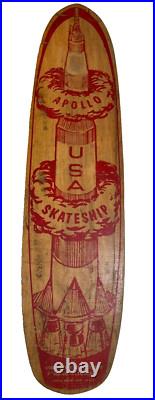
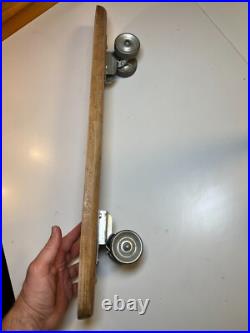
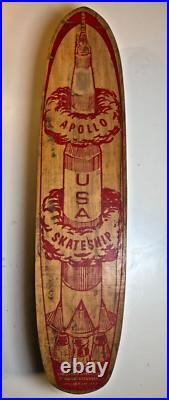
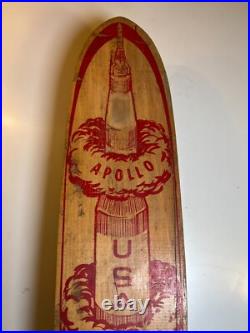
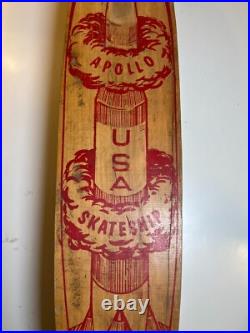
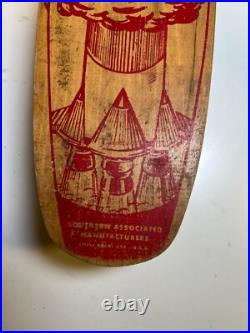
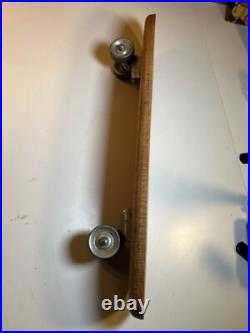
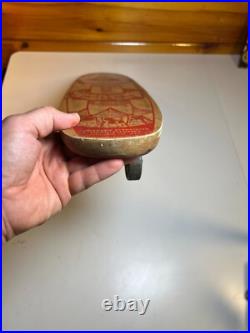
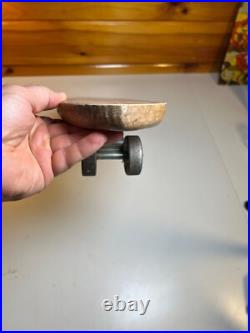
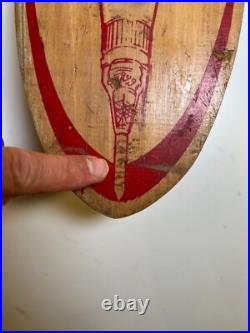
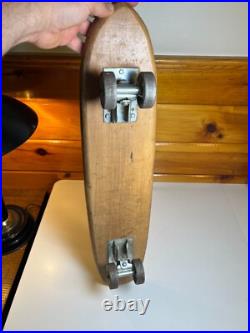
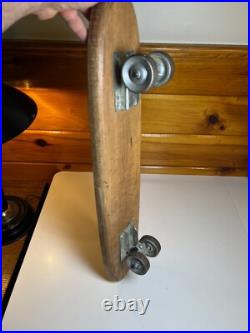
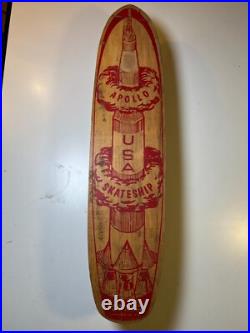
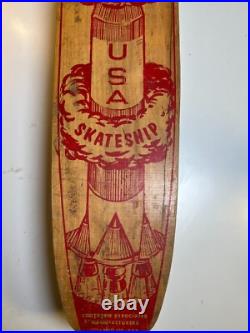
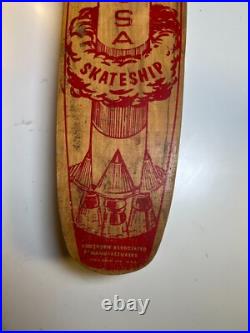
The Holy Grail if you ask me.. Remembering our historical 1960s ventures into outer space (Apollo happened in’61). Its of the era whereby these first wooden boards with metal wheels were meant to teach you how to surf by what was assumed to be easier… This one is in better shape than many… And these are very rare. Note the is a faint “Larry” written in faded marker in the very top, tip, of the rocket (see finger point pics). Graphics are brighter and more complete with fine details than many examples; Lovely example. Made in Little Rock Arkansas! 23.25″ L x 5.5″ W. It doesn’t get cool than this folks! Vintage space travel meets vintage skateboarding! However, before skateboards there were scooters, sometimes known as kick scooters and push scooters. Varied forms of scooters have been traced back to the early 1900s, most of them made from wood, metal, or a combination of the two. Scooters had anywhere from two to four wheels. Some of the wheels were metal and others were similar to the wheels on pedal cars. In the 1940s and 1950s, crate scooters made popular sidewalk vehicles. Most crate scooters were handmade. They were relatively inexpensive and simple for kids to construct by using a milk crate or wooden fruit box and metal roller skate wheels attached to a wooden 2 x 4. Eventually kids started removing the boxes and handlebars and just started riding the board with wheels, reminiscent of the famous skateboard scene in the 1985 film. Back to the Future. By the early 1960s, skateboarding started luring participants from the surfer scene. In 1962 a southern California surf shop, Val Surf, began making its own brand of skateboards and struck a deal with Chicago Roller Skate Company for the wheels. The skateboards began to attract everyday surfers who could use the boards when they weren’t in the water, and thus the term “sidewalk surfer” was coined. Additionally, skateboarding gained popularity when Larry Stevenson, publisher of. Promoted it in his monthly magazine. In 1963, Stevenson made the first professional skateboards using the Makaha brand and organized the first known skateboarding contest. That same year saw an evolution in skateboard design with the use of clay (also known as composite) wheels that replaced treacherous metal ones. Moving ahead, in 1964 surf and sailing entrepreneur Hobart “Hobie” Alter joined forces with Vita-Pakt company to make a line of Hobie skateboards; the Hobie line also sponsored several contests and professional skaters. Later that summer, the musical group Jan and Dean performed Sidewalk Surfin. On Dick Clark’s. An event which helped further popularize skateboarding with mainstream society. In 1965, the skateboarding sport peaked as manufacturers tried to keep up with the demand, cranking out an estimated 50 million skateboards between 1963 and 1965. In May, the world’s first skatepark, Surf City in Tucson, Arizona opened to the public.. Skateboard with metal trucks. Old wooden skate deck. Metal wheels for smooth ride. Wooden skateboard with metal wheels. Retro metal wheels skateboard. 60s era skate deck. Vintage skateboard with character. Wooden skateboard with retro charm. Metal wheels for vintage feel. Classic wooden skateboard design. Vintage skateboard for collectors. Antique metal wheels skateboard. Vintage skateboard with history. Wooden deck with metal wheels. Classic skateboard with character. Vintage skateboard from Little Rock, Arkansas.